
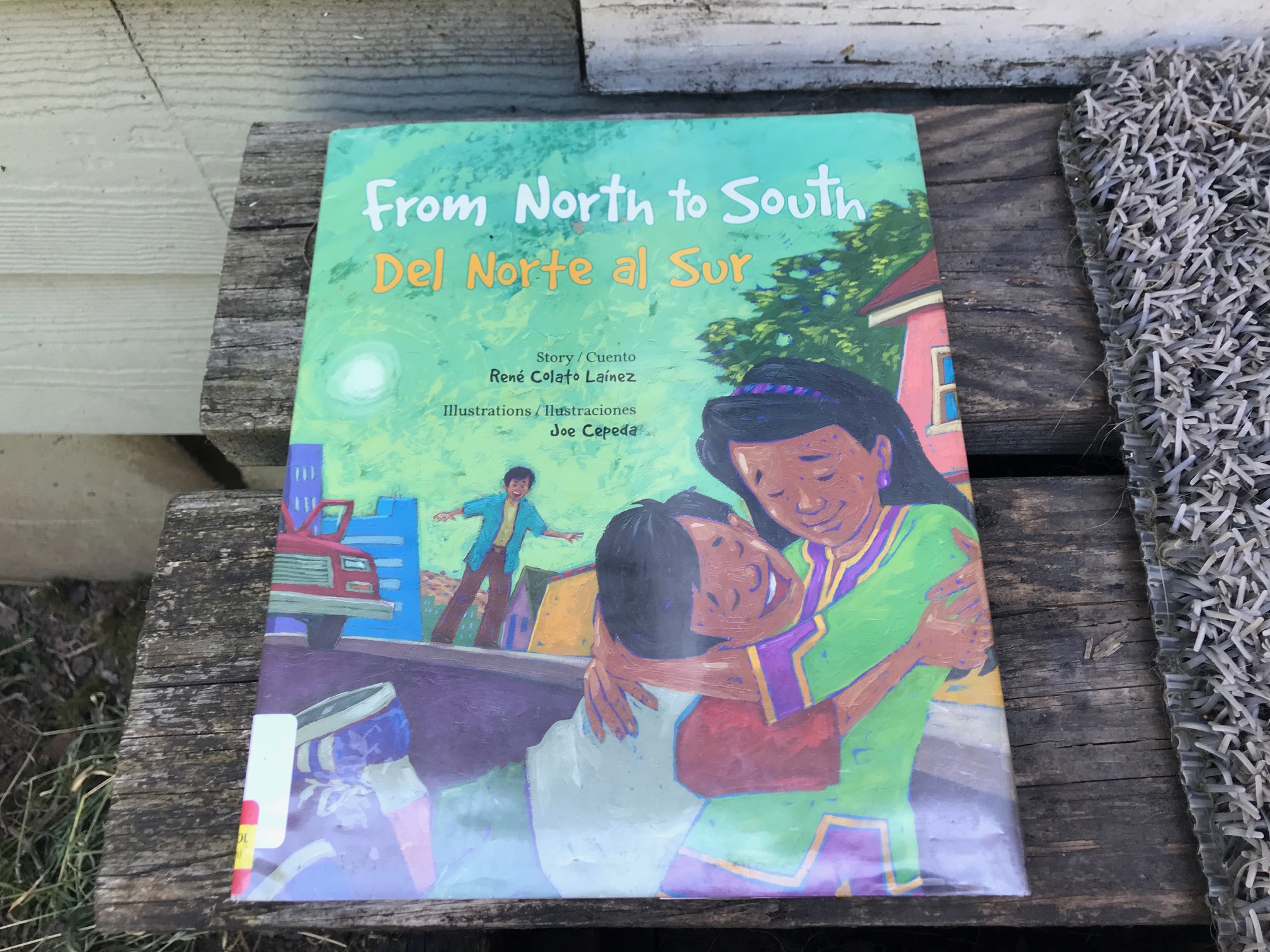
Book: From North to South (Del Norte al Sur) by René Colato Laínez, illustrated by Joe Cepeda
Book type: Picture book
Author summary: René Colato Laínez was born in El Salvador, where he spent time with his uncle, write Jorge Buenaventura Lainez. He says that it was there washing clothes with his uncle that he learned what it meant to be a writer. When he was young, El Salvador experienced a civil war, and him and his family had to move to the United States. He says, “I am writing about the immigrant Latino child living in the United States and about the Latino child living in two cultures. In my case being a Latino Author has helped me to publish my books. I believe that in order to write an authentic story, you have to live it. Because you know the feelings, dangers, hopes, tears and dreams and you can reflect them in a book,” (The Latino Author, 2019). Lainez writes stories that come from his own true experiences, and his primary goal as a published author is to, “…produce good multicultural children’s literature; stories where minority children are portrayed in a positive way, where they can see themselves as heroes, and where they can dream and have hopes for the future,” (Laínez, n.d.). Laínez’s books have won many awards, including the International Latino Book Award in first place, second place, and honorable mention.
Illustrator summary: Joe Cepeda is an award winning children’s illustrator of more than 30 books. He creates life-like illustrations by sketching and painting with brushes that he touches up digitally once they are finished drying. He describes his work as, “Making a picture book is making a small movie. You need action scenes, as well as moments to introduce a character, close up shots, contemplative scenes, chase scenes, sad pictures.. etc. There’s some level of “action” in every image. Because a character is standing in the middle of an empty room, doesn’t mean there is no action there. Perhaps tilting the characters head to look over his shoulder offers a sense of fear, anxiety… tension. A clenched fists alludes to anger. There’s always action,” (Temean, 2011).
Summary: From North to South is the heart-wrenchingly honest account of a little boy whose mother is deported to Mexico for not having the right papers. He goes to visit her in Mexico and wonders, when can she come home to me? José plants seeds with the other children in the deportation refuge and the experience helps him to feel closer to his mama, who he hopes will come home to be with his family soon.
Connections:
Multicultural literacy
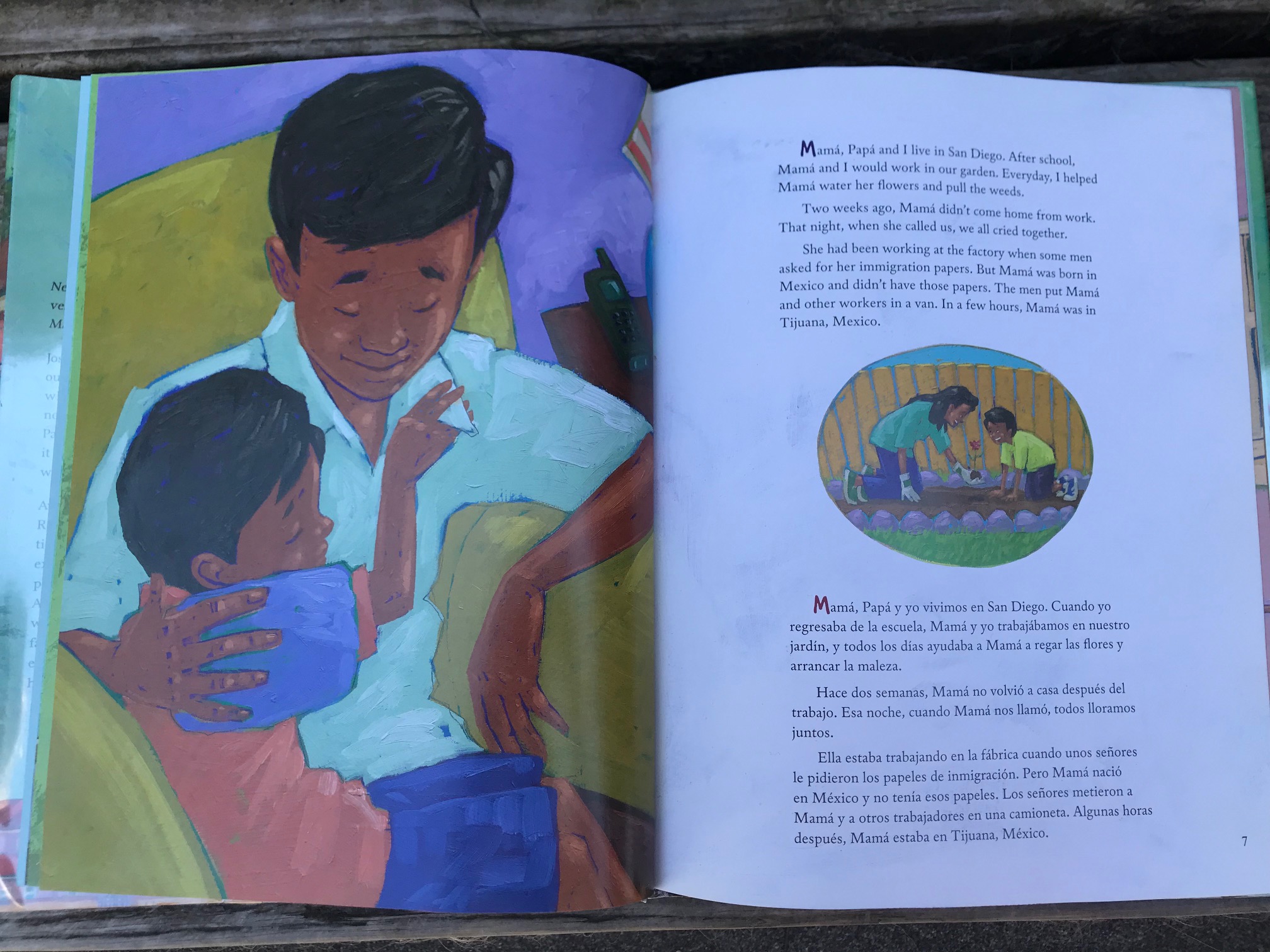
Taylor (2000) reminds us that although it may seem safe to say that we don’t “see race”, this approach which is known as color-blind racism, “…disregards the influences that have affected the life of the learner. It also discourages teachers and students from seeing the world from more than one perspective,” (pg. 25). A book like From North to South takes a story that most people in the world are familiar with – feelings of sadness at being separated from your family – and introduces an important element: what if the reason you were separated from your family was because your family wasn’t legally allowed to live in the same place as you? This experience is common for many Latino-Americans in the United States, and it is important for this reality to be represented in text. Not only for those who are currently experiencing it to be able to be validated and see themselves in literature around them, but also to give a unique perspective into what it would feel like to someone who otherwise would not understand. This helps others to understand and, “…recognize the diversity that defines and strengthens our society,” (Taylor, 2000, pg. 25).
Although From North to South tells a story that may be unfamiliar to many readers, it is a constant reality in today’s world, especially in the United States. According to CNN, “The Trump administration has identified 471 parents who were removed from the United States without their children, according to the latest court filing in an ongoing lawsuit,” (Alvarez, 2019). As sad as it may be, this is a common experience in the United States. The reality for many is that their parents are undocumented, in the United States illegally, and at any moment their parents may be taken away from them. It is not always possible to go visit these family members either, as those still living in the United States may be undocumented as well, and may not be able to go back and forth across the border to visit those who have been deported.
Although From North to South appears at first to be a simplistic picture book, the book tells a story that many Latino-American children may be familiar with, and they can see themselves and their own experiences through the eyes of José, a little boy who just wants his mother to come home to him because he misses her, and because “Papá’s burnt tortillas are not very tasty,” (Laínez, 2014).
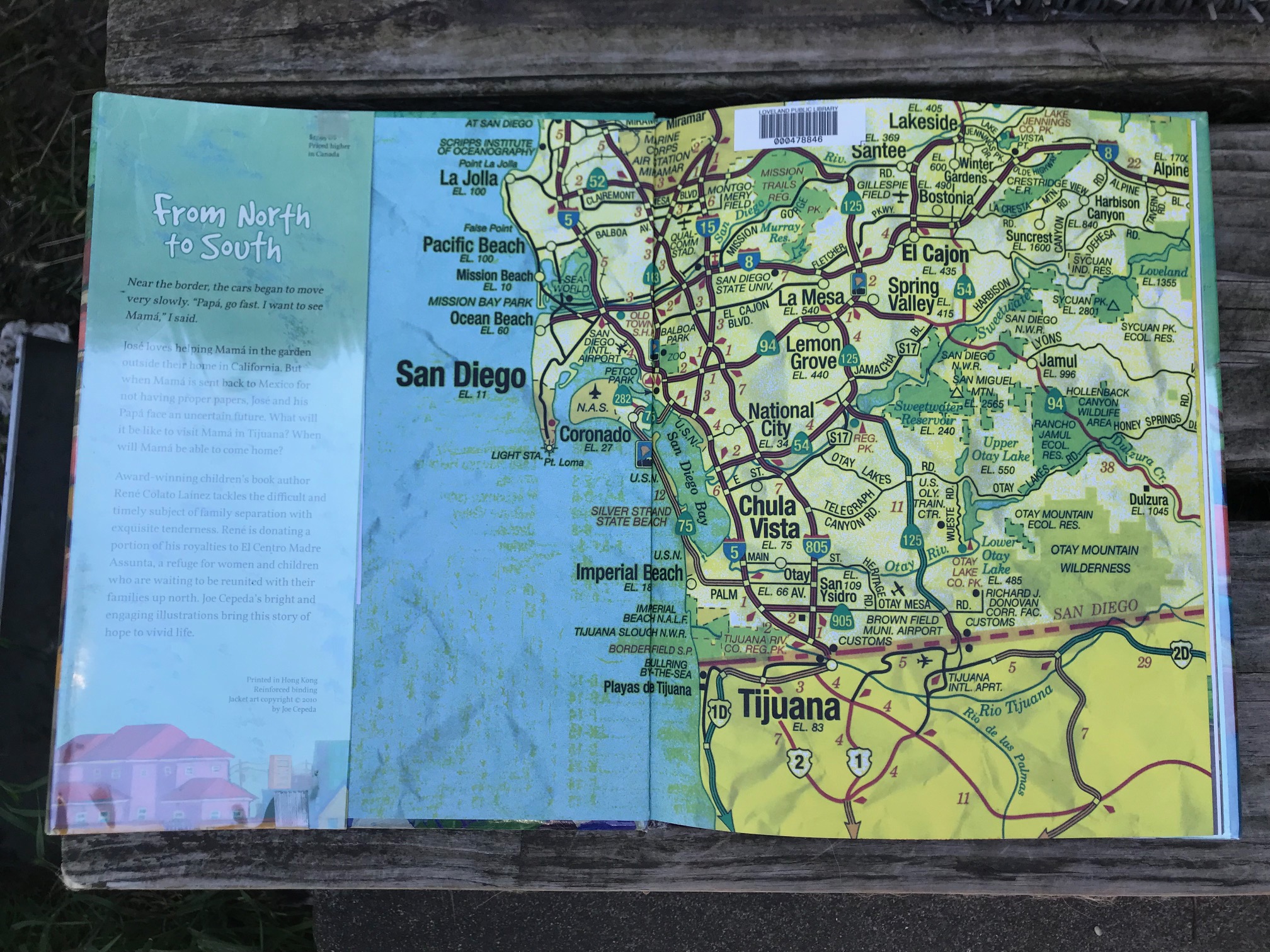
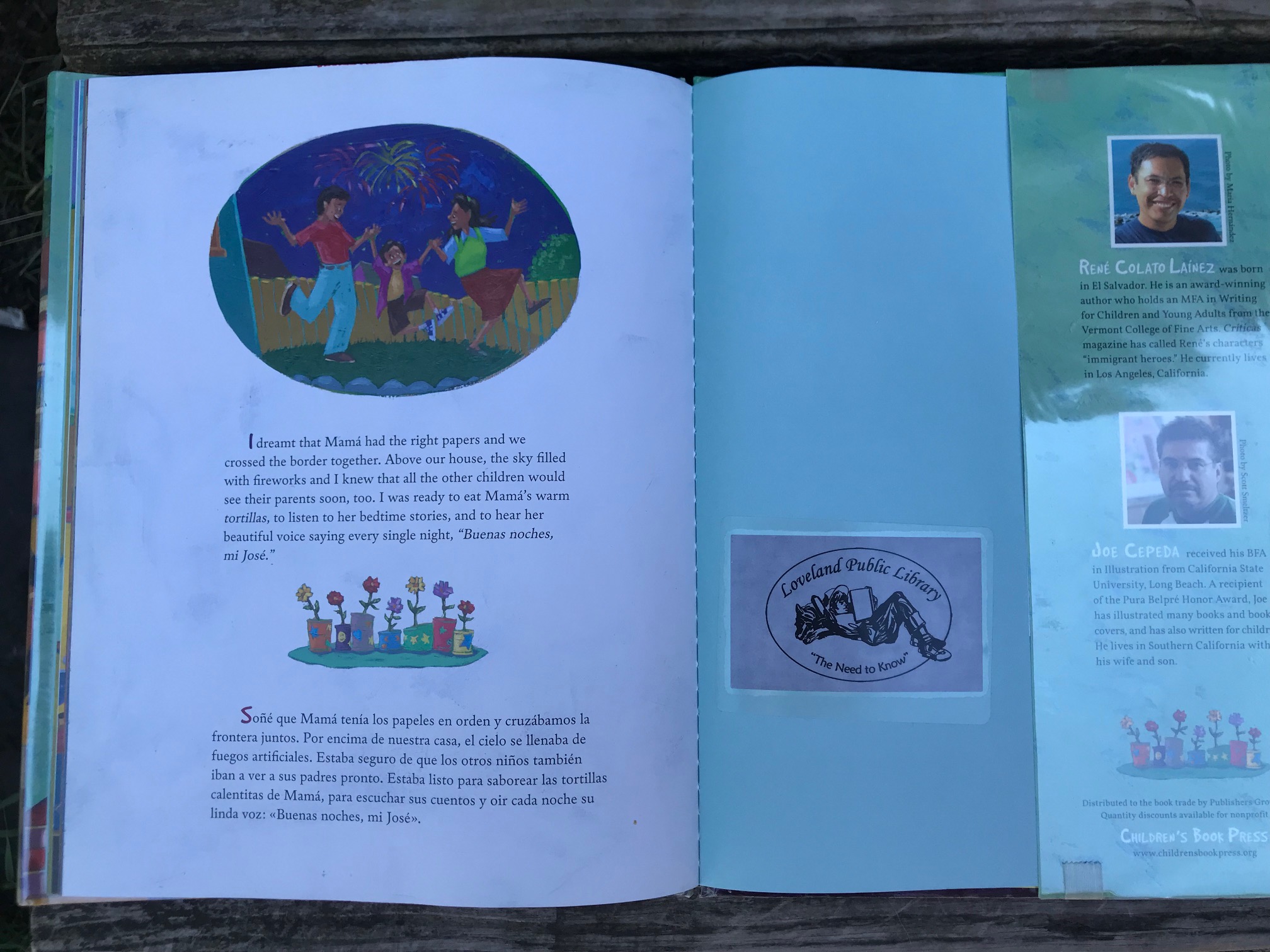
Laínez gives the reader and opportunity to feel what José feels, and without telling the reader how or what to feel about issues of immigration, invites us to think about the high cost of being separated from your family, and how this experience may shape a person going through it. Through the touching description of José planting seeds with his mother and the other children separated from their families, Laínez lets us experience life through a little boy’s eyes: a little boy who just misses her mother and wants to be with her in any way possible.
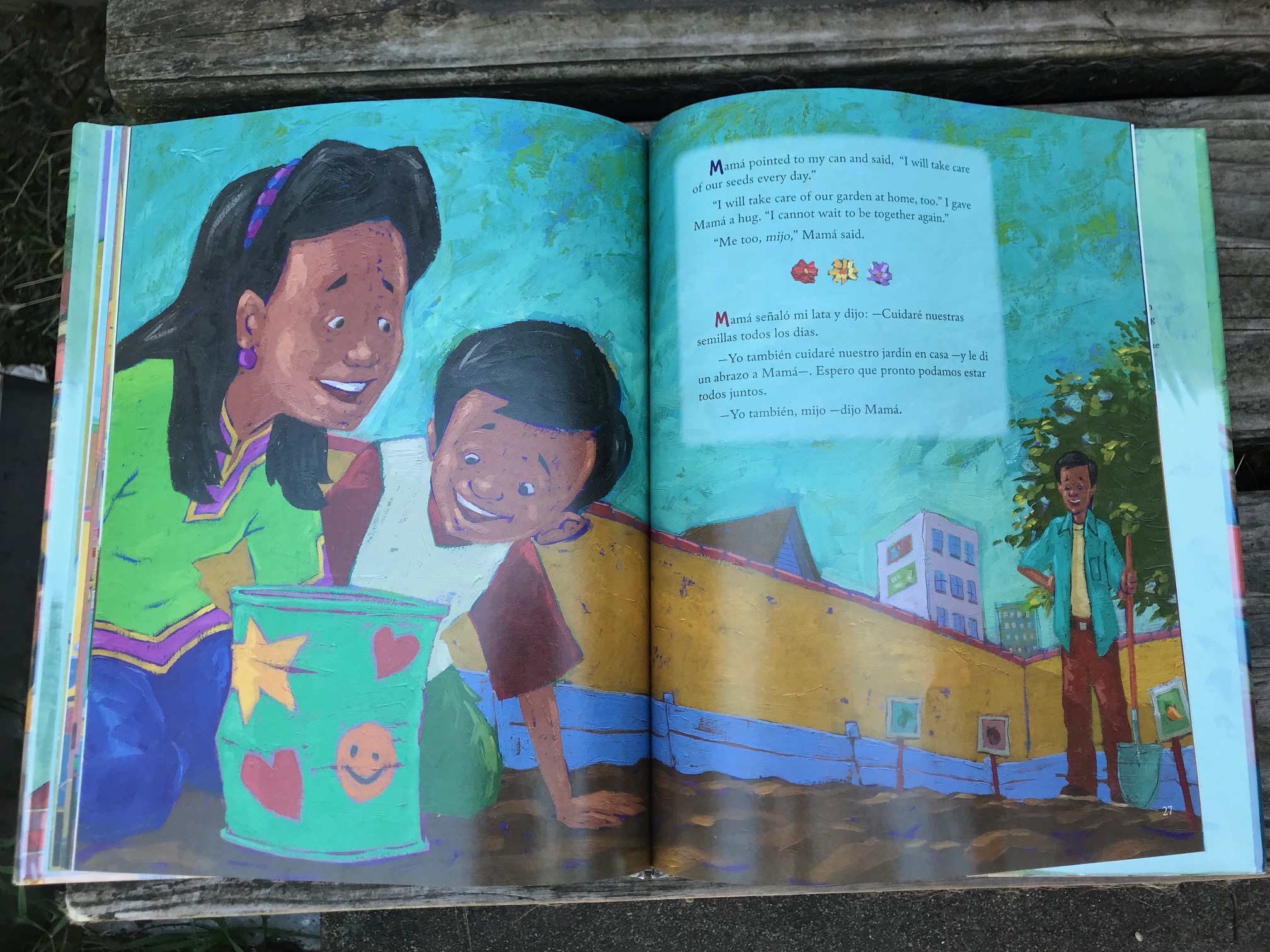
This book is written in both languages – Spanish and English. It has English at the top of each page with a Spanish translation underneath. This makes the book accessible to both English and Spanish speakers/readers which is affirming and powerful for readers who speak one or both languages for both to be able to engage simultaneously. Instead of a Spanish speaking reader having to acquire this book in their native tongue, they have the unique opportunity to read it in their home language alongside English, and to share the book with someone who speaks and reads either language. This could create a powerful experience for a child who speaks Spanish at home and is learning English at school, to be able to share the book with those at home who may not speak English.
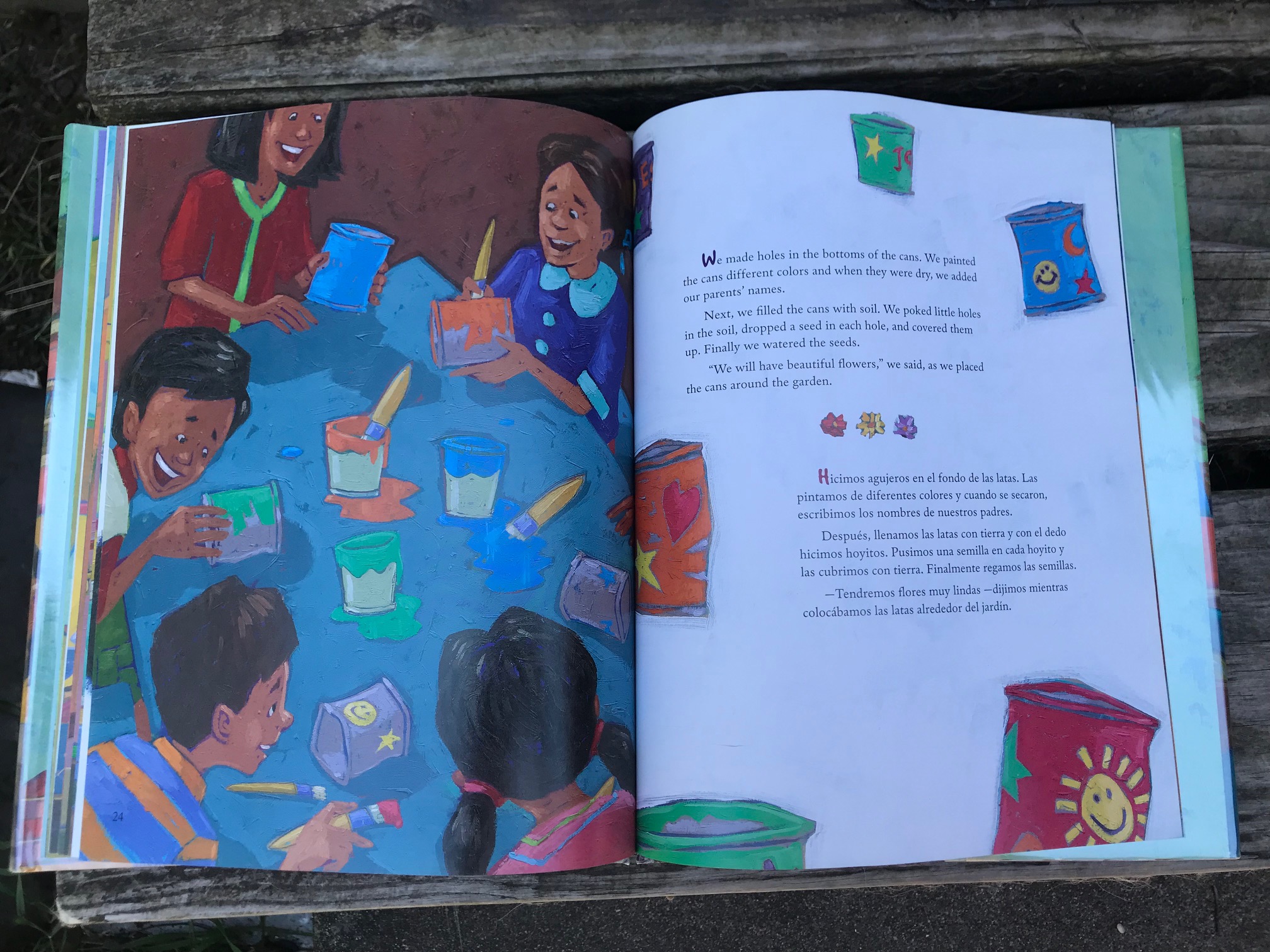
An authentic multicultural book needs to have “Cultural details… represented accurately… these may include the use of dialects or idioms; descriptions of ethnic foods, customs, and clothing; and information about religious beliefs and practices,” (Tunnell, et al. 2016, pg. 203). Laínez creates an realistic experience by using Spanish terminology and language throughout the book, with the main character referring to his parents as papa and mama, his mother and father calling him mijo (son) and adding in Spanish phrases like buenas noches, muchas gracias, hola, and mentioning the bakery where his mother bought her favorite food: pan dulce. Without overwhelming the reader with an abundance of facts about Mexican culture, Laínez is able to construct an authentic viewpoint into José’s world, and to construct a positive and reaffirming message to those in the same situation: we all just want to be with our family, with people who love us and care for us.
Visual Elements
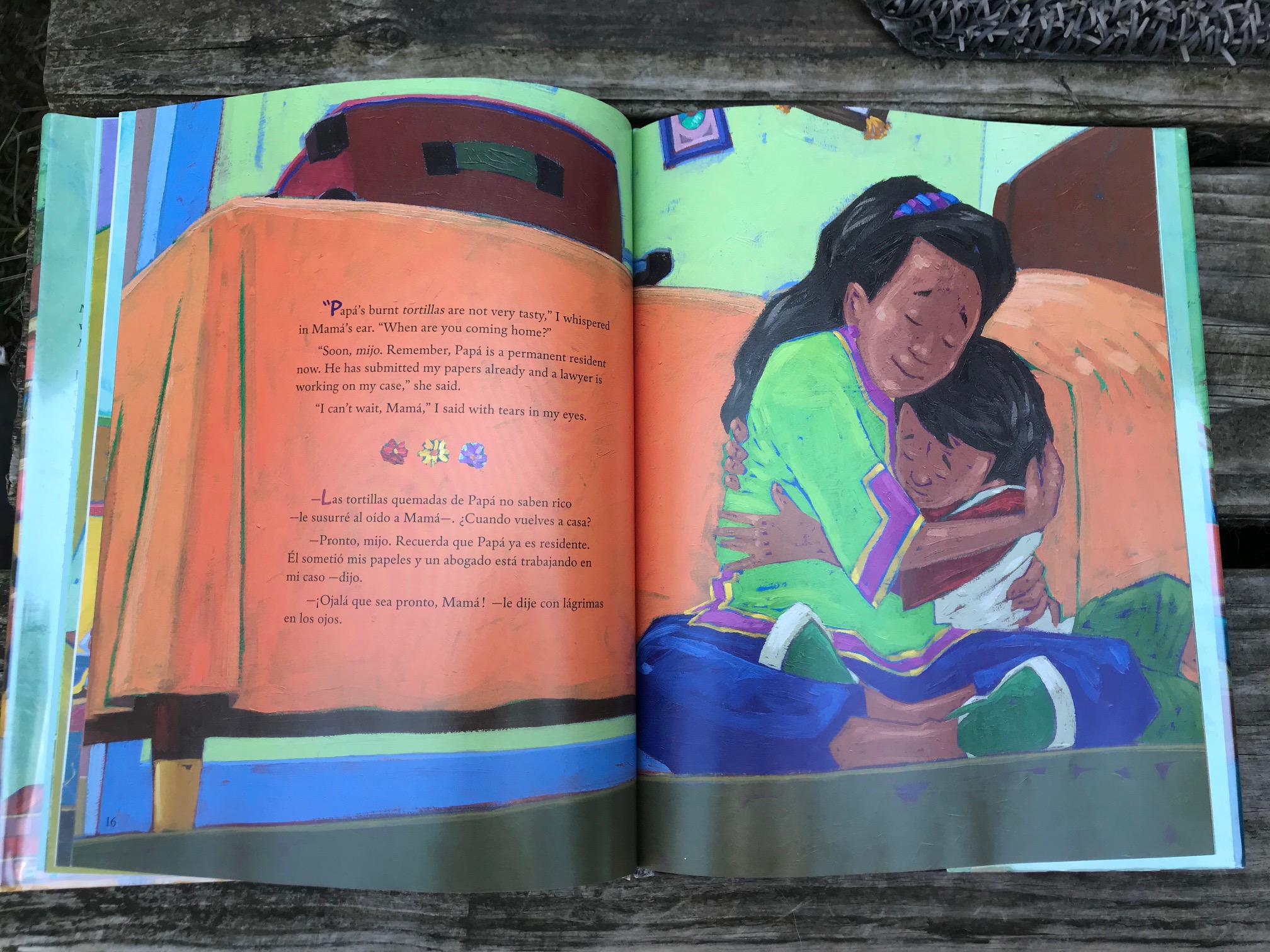
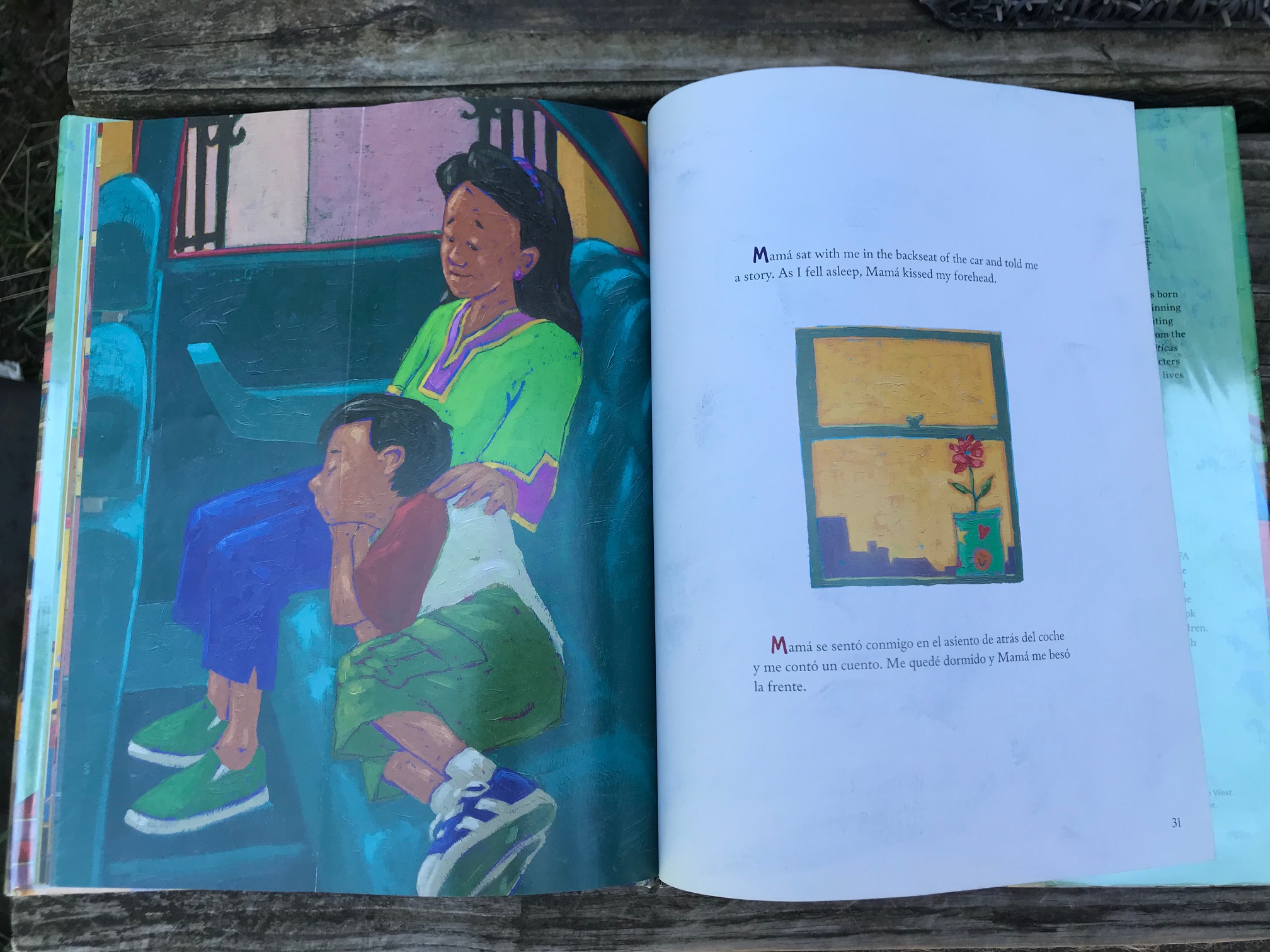
Illustrator Joe Cepeda is a master at depicting action through the use of line in this book. José is shown throwing his arms up in the air in excitement at the idea of getting to finally see his mother, shown running toward his mother with open arms – her eyes wide in anticipation of hugging her son, and he is shown embracing his father and his mother in various scenes, eyes closed, creating a sense of closeness, warmth, and love. Cepeda’s paintings feature soft edges, making a scene that might be frightening to young readers (being separated from those they love) a little less scary, while still feeling realistic. Cepada uses bright colors to help the reader to feel the joy that José feels in seeing his mother and how beautiful the flowers his plants in decorated cans really are. The illustrations in this book draw the reader in and really show us the feelings that José is experiencing – his sadness, his happiness, and his longing to be with his mother are all shown – from him sleepily laying across his mother in the car, to his imagined celebration with his mother and father in the same place under colorful, exploding fireworks – all help to establish the setting and reinforce the overall mood. This book is about family at its core, and without Cepada’s illustrations, we wouldn’t be able to as accurately put ourselves in José’s shoes.

Contemporary realistic fiction
Even though Laínez’s book is not a true story, it is a very realistic depiction of what it feels like to be separated from your family. Contemporary realistic fiction resonates with a reader because they can see themselves inside of the story – the characters are relatable, and although they offer us a new viewpoint, the central message is the same. Readers can relate to the underlying theme of family in this story, while opening up to what it feels like to be away from someone you love very much. Whether it is your parents, grandparents, aunts, uncles or cousins – most people can relate to what it feels like to have someone they love live somewhere else, which makes this story relatable even though it tells one very specific story: separation due to deportation.
The exact numbers vary and are hard to find, but hundreds of families face this exact situation in the United States. Whether deported after already being in the country for a number of years like José’s mother, or separated at the border, this is something that is happening daily in America. Jordan, M. and Dickerson, C. report: “Returning children even to eligible parents has been messy and has revealed challenges facing the government as it complies with the judicial order. For example, reunifications at the Port Isabel detention center in South Texas screeched to a halt on Sunday after it was locked down for five hours, according to Carlos Garcia, an immigration lawyer who was prevented from entering the building to meet with his clients. The lockdown resulted from an accidental miscounting of detainees there, Mr. Garcia said. It was only the latest hiccup at Port Isabel, where parents, children and their advocates have had to wait for hours, or even days, for reunification. ‘It’s a mess,’ a person familiar with the reunification process said on Tuesday, adding that “the wait times have been enormous,” (2018). A woman interviewed in the same article said that she didn’t believe that reunification with her children would occur – at all. This uncertainty is painful for so many who have been distanced from those that they love, and the process to be together again as a whole family is a difficult and long road.
We often hear stories from adults in this situation, but Laínez’s book gives us a realistic look into what it feels like as a child to not know when your mother is coming home. Tunnell, et al. explain: “The events and characters of contemporary realistic fiction flow from the author’s imagination… writers of contemporary realistic fiction observe life around them to tell their stories, often drawing on their own backgrounds,” (2016, pg. 138). Laínez no doubt takes his own life experience from being an elementary school teacher to children with similar experiences, and his own experience of being an immigrant in America into his own book, to create one that is realistic, believable, and moving, as we experience a full range of emotions from excitement, to joy, to loss and longing, all through José’s eyes.
References:
Alvarez, P. (2019, March 07). 471 parents deported from US without children during family separations. Retrieved July 4, 2019, from https://www.cnn.com/2019/03/06/politics/family-separation-update-immigration-border/index.html
Jordan, M., & Dickerson, C. (2018, July 24). More Than 450 Migrant Parents May Have Been Deported Without Their Children. Retrieved July 4, 2019, from https://www.nytimes.com/2018/07/24/us/migrant-parents-deported-children.html
The Latino Author. (2019). René Colato Laínez. Retrieved July 4, 2019, from http://thelatinoauthor.com/featuredauthors/rene-colato-lainez/
Laínez, R. C. (n.d.). Meet the Author – Biography. Retrieved July 4, 2019, from http://renecolatolainez.com/
Laínez, R. C., & Cepeda, J. (2014). From North to South (Del Norte al Sur). San Francisco, CA: Childrens Book Press.
Taylor, S. V. (2000). Multicultural is Who We Are: Literature as a Reflection of Ourselves. TEACHING Exceptional Children, 32(3), 24-29. Retrieved July 4, 2019.
Temean, K. (2011, June 25). Illustrator Saturday – Joe Cepeda. Retrieved July 4, 2019, from https://kathytemean.wordpress.com/2011/06/25/illustrator-saturday-joe-cepeda/
Tunnell, M. O., Jacobs, J. S., Young, T. A., & Bryan, G. (2016). Children’s Literature, Briefly (6th ed.). Upple Saddle River, NJ: Pearson.
 Adventures in Children's Literature
Hi Kate! I really appreciated you including facts in your post, especially the CNN quote about so many parents being deported without their children. It is horrifying to see those numbers, and I’m sure the true total is much larger. Thanks for taking the time to research and find that information. I also liked how you included the fact that the author and illustrator don’t force the reader to feel any way about immigration as a whole. I agree with you that they write and illustrate in such a way that people can form their own opinion, which is super important. Awesome work!
LikeLike