“Books are a uniquely portable magic.” – Stephen King
Hello, and welcome to my blog!
My name is Kate, or as my children refer to me: Ms. Blume. I am a 1st grade teacher in Denver, Colorado and I’ll be using this blog as part of my master’s program to analyze, discuss, and share with all of you the children’s literature I’ll be reading.
As an avid bookworm and self-proclaimed bibliophile, I am very excited to get started.
Book:
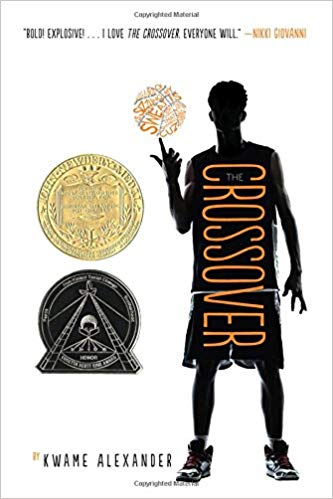
The Crossoverby Kwane Alexander, 2015 Newberry Medal Winner &
2015 Coretta Scott King Honor Award Winner
Type of book: This book
experiments with a lot of different types of poetry. The book is mostly written
as a narrative (telling a story) poem
in free verse – lack of rhyme and cadence, but the author also has chapters
that are written in a concrete style
with words flowing across the page and lyric
poems where there is rhyme and description. This book is unique in that it
uses a lot of different styles throughout.
Author overview: Kwane
Alexander is an award winning author of 32 books who interestingly enough,
began to hate reading when he was younger because he says he was forced to read
things that he didn’t want to read. Alexander explains how he got into writing poetry: “Nobody said,
give him a book he’ll love; so I was much like Nick in booked. I didn’t like
books at all,” (2018). Alexander read fun
books when he was a kid, and he wanted to make reading fun for others. As
Alexander made his way back to loving reading through poetry, he wanted to be
able to share that experience with others. Alexander explains: “They [poetry books] had complete stories in five lines… And I think
that’s why I write novels in verse now, because I love all the white space. I
love the rhythm, the rhyme and figurative language and I like how you can say
so much in so few words. I like to tell a stories that are powerful and
emotional in a few lines,” (2018). This shines through in his work as he is
able to tell a captivating story in fewer words than would be expected in a
“regular” novel.
Summary of the book: The Crossover is a book about a young boy’s
love affair with basketball, and the interwoven feelings of being a teenager. Josh
– lovingly referred as Filthy McNasty by
those around him for his sick basketball
skills is the Most Valuable Player on his team, but he’s also dealing with life
around him. His twin brother has his first girlfriend and Jordan feels
neglected and abandoned by him, and also: his dad is really, really, sick. This
book explores family dynamics through the eyes of a young basketball star and
what it’s like to grow up in a family that lives and breathes education (and
basketball) at the same time.
Connections:
Poetry
Alexander uses many different types of
poetry throughout The Crossover. The
very opening page of the book is a lyric poem that draws the reader in
instantly – even the words are written in ways to make the reader excited about
what is about the happen: bolded, enlarged, italicized, and moving down the
page, we get exposed to what this book is going to be like. Alexander draws us
in with music in language when he
says: “At the top of the key, I’m MOVING & GROOVING, POPing and ROCKING – Why you BUMPING? Why you
LOCKING? Man, take this THUMPING. Be careful though, ‘cause now I’m CRUNKing CrissCROSSING FLOSSING flipping and my dipping will leave you SLIPPING on
the floor, while I SWOOP in to the finish with a fierce finger roll… straight in the hole: Swoooooooooooooosh,”
(2014, pg. 3). With an opening chapter like that, it’s impossible to not be
hooked.
Alexander varies the structures of his
chapters. Though most are free verse, occasionally they rhyme. The chapter “Ode
to My Hair” starts with a different line each time and every second line ends
in it. The way it’s written allows
the reader to hear it in Josh’s voice, as if he were rapping it to us. “If my
hair were a tree / I’d climb it. I’d kneel down beneath / and enshrine it. I’d
treat it like gold / and then mine it. Each day before school / I unwind it.
And right before games / I entwine it,” (2014, pg. 33). This unique style
allows us to see into Josh’s mind and understand how important his hair really
is to him, so when his brother accidentally ruins it, we can truly and deeply
understand why he is so upset.
There is only one chapter in The Crossover that rhymes, and this
detail stands out. The second chapter, “Josh Bell” when we are introduced to
the main character and how he got his name, is the only chapter that truly rhymes (versus rhyming every other
line with the same word: “it”). We’re introduced to Josh as, “If anyone else
called me / fresh and sweet, / I’d burn mad as a flame. / But
I know she’s only talking about my game. / See, when I play ball, / I’m on
fire. / When I shoot, / I inspire. / The hoop’s for sale, / and I’m the buyer,”
(2014, pg. 4). The fact that this is the only chapter that rhymes makes it
stick in the reader’s mind. Because this chapter is about how Josh got his nickname
Filthy McNasty and his nickname is an
important and common theme throughout the book, it makes sense that Alexander
wouldn’t want us to forget it.
Alexander is a master of writing a captivating
story in just a few words, but that doesn’t mean that any of the details are
lost. Josh’s parents care a lot about his education – his mother is a PhD and
Assistant Principal of the school he attends, and his love of reading and
writing shines through in his extensive vocabulary. Alexander’s precise vocabulary shows exactly how
important education is to Josh, and how smart he is. Josh introduces us to a
lot of words that are important and impactful to him, and frames them like a
dictionary where he gives the pronunciation and part of speech, and then
explains what the word means and what it
means to him. This gives us really important insight into who Josh is as a
person, and draws us into his character and story. He introduces us first to “crossover”
which is fitting as his life is basketball, but he also gives us: “calamity”, “patella
tendinitis”, “pulchritudinous”, “hypertension”, “ironic”, “tipping point”, “churlish”,
“profusely”, “estranged”, “myocardial infarction”, and finally “starless”. All
of these words have very important meanings to Josh and move along the plot,
all while giving us a distinctive view into who he is a person. Josh is
attempting to make sense of the world in one of the best ways he knows how –
through words.
Alexander also use a lot of figurative language which helps to
develop the characters in the story and also helps us to imagine Josh’s world
as he sees it. When Josh describes his feelings during a game, he says: “My
stomach is a roller coaster. My head, a carousel. The air, heavy with the smell
of sweat, popcorn, and the sweet perfume of mothers watching sons,” (2014, pg.
24). We might not know how it feels to love
basketball with every fiber of your being and still feel nervous while playing, but Alexander skillfully relates
it to something we might understand – being on a roller coaster and the nervous
excitement that comes with being at a carousel. His parents speak this way too,
with his dad proclaiming, “We beat those boys like they stole something, he
adds,” (2014, pg. 63) and his mother asking his father, “You love me?” and him
replying, “Like summer loves short nights,” (2014, pg. 74). Josh even reminds us,
“…just because your teammate gets fouled on a lay-up doesn’t mean you shouldn’t
ever drive to the lane again,” (2014, 123) and describes not having a
girlfriend and that feeling of longing as, “I’m still hungry, and right about
now I wish I had an apple of my own,” (2014, pg. 120). Alexander takes concepts
that might be unfamiliar and uses rich similes and metaphors to connect them to
things the reader will know and understand, providing us a much deeper
understanding.
Multicultural literacy
Alexander does an absolutely incredible job of smashing
stereotypes from the very beginning of the book to the end. Josh is a young
black teenager who loves to play basketball, and there are many stereotypes in
America about what that might look like. A common stereotype portrays black
children as growing up without a father figure: “The myth is that most
black fathers are absent from their homes — or that most black children grow up
without their fathers. Both of these claims are false. Still, the
myth shows up in tweets carrying misleading
statistics, often from people blaming fatherlessness for numerous problems
facing the black community. It also comes from officials, such as Dallas police
chief David Brown who said, “70% of the African
American community is raised by single women,” (Lves, 2017). Alexander smashes
this stereotype in The Crossover. Not
only does Josh have a fully together family, his dad is actually a stay-at-home
parent. Josh’s dad says to him, “My
playing days are over, son. My job now is to take care of this family… honestly
right now I’m fine coaching this house and keeping up with you and your
brother,” (2014, pg. 17).
Alexander also shatters the stereotype of the young black male as a
“thug” when his mother says things to him like: “Boys with no self-control
become men behind bars,” (2014, pg. 138), “I’m confused, Josh. Make me
understand. When did you become a thug?” (2014, pg. 139) and “Boys with no
discipline end up in prison,” (2014, pg. 139). His family shows that they will
not accept his behavior, will not let his character be decided by those around
him, and that he must be an upstanding person in order to earn respect. His
mother knows how the world sees him
and his future, and she knows how important it is to make sure that he knows
and understands that it will not be tolerated.
Alexander shows us over and over throughout the book that a young
black boy who loves basketball is not any of the things that the world might have
already decided he is. He is educated and so are his parents, he is part of a
loving and tight-knit family, and he won’t be a thug. Although Josh may have to work harder than some to prove this
– his family will make sure that he does. Alexander works hard through The Crossover to show us that love and
support go a long way, and sheds a positive light on a community that isn’t
always portrayed that way. In the light of the not so distant events of
violence throughout black communities in the United States: the Ferguson riots
in 2014, the riots over Freddie Gray’s death in 2015, Alexander asks us through
his writing to consider another story. Without actually asking us to do so, we
consider the Black Lives Matter movements
and Hands up, don’t shoot and what
that really means to a community of people who must rise up to fight the
stereotypes that are so often pushed on them.
References:
Alexander, K.
(2014). The Crossover. Boston, MA: HMH Books for Young Readers.
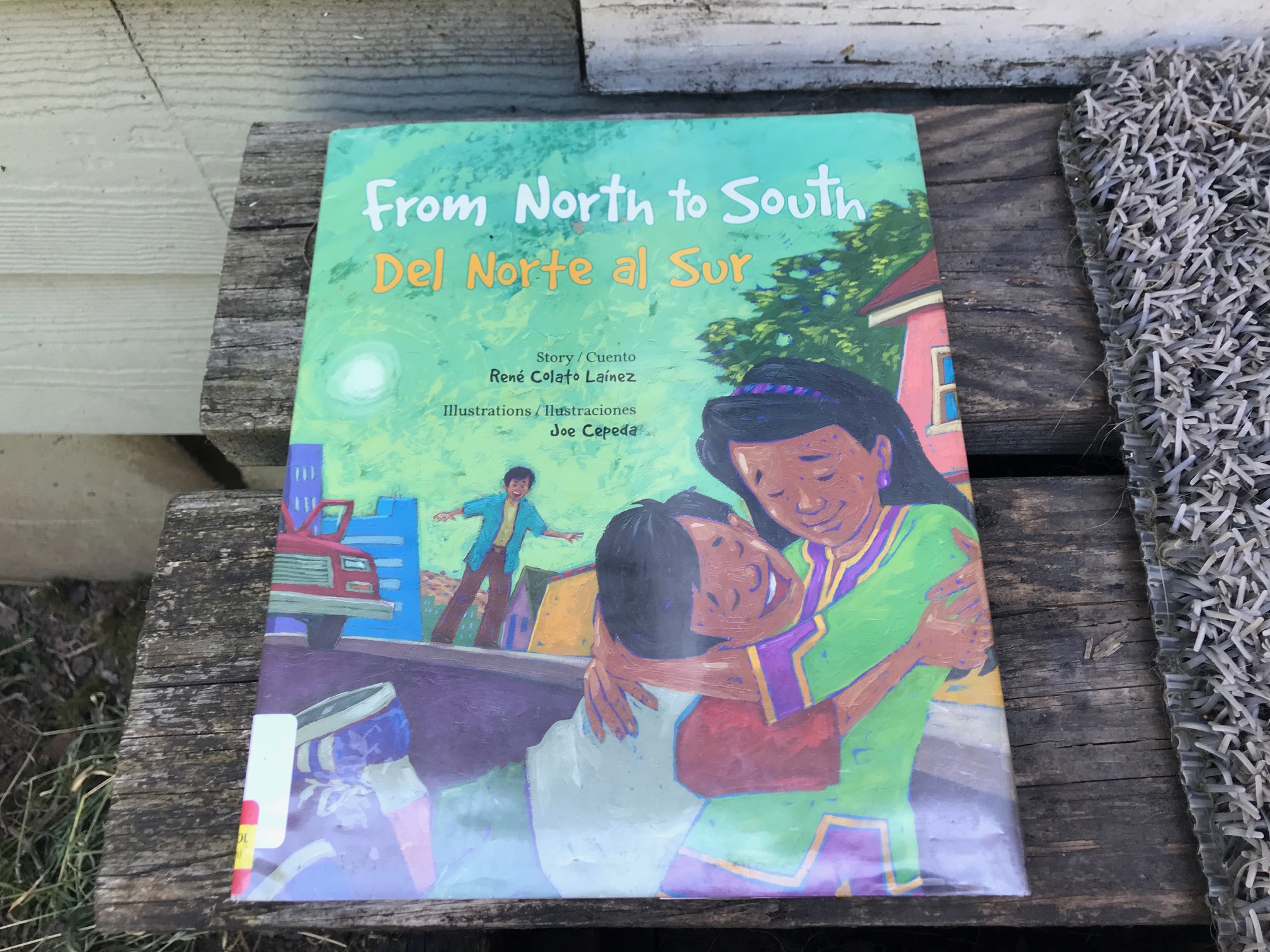
Book: From North to South (Del Norte al Sur) by René Colato
Laínez, illustrated by Joe Cepeda
Book type: Picture book
Author summary: René Colato Laínez
was born in El Salvador, where he spent time with his uncle, write Jorge
Buenaventura Lainez. He says that it was there washing clothes with his uncle
that he learned what it meant to be a writer. When he was young, El Salvador
experienced a civil war, and him and his family had to move to the United
States. He says, “I am writing about the
immigrant Latino child living in the United States and about the Latino child
living in two cultures. In my case being a Latino Author has helped me to
publish my books. I believe that in order to write an authentic story, you have
to live it. Because you know the feelings, dangers, hopes, tears and
dreams and you can reflect them in a book,” (The Latino Author, 2019).
Lainez writes stories that come from his own true experiences, and his primary
goal as a published author is to, “…produce good multicultural children’s
literature; stories where minority children are portrayed in a positive way,
where they can see themselves as heroes, and where they can dream and have
hopes for the future,” (Laínez, n.d.).
Laínez’s books have won many awards, including the International Latino Book
Award in first place, second place, and honorable mention.
Illustrator
summary: Joe
Cepeda is an award winning children’s illustrator of more than 30 books. He
creates life-like illustrations by sketching and painting with brushes that he touches
up digitally once they are finished drying. He describes his work as, “Making a
picture book is making a small movie. You need action scenes, as well as
moments to introduce a character, close up shots, contemplative scenes, chase
scenes, sad pictures.. etc. There’s some level of “action” in every image.
Because a character is standing in the middle of an empty room, doesn’t mean
there is no action there. Perhaps tilting the characters head to look over his
shoulder offers a sense of fear, anxiety… tension. A clenched fists alludes to
anger. There’s always action,” (Temean, 2011).
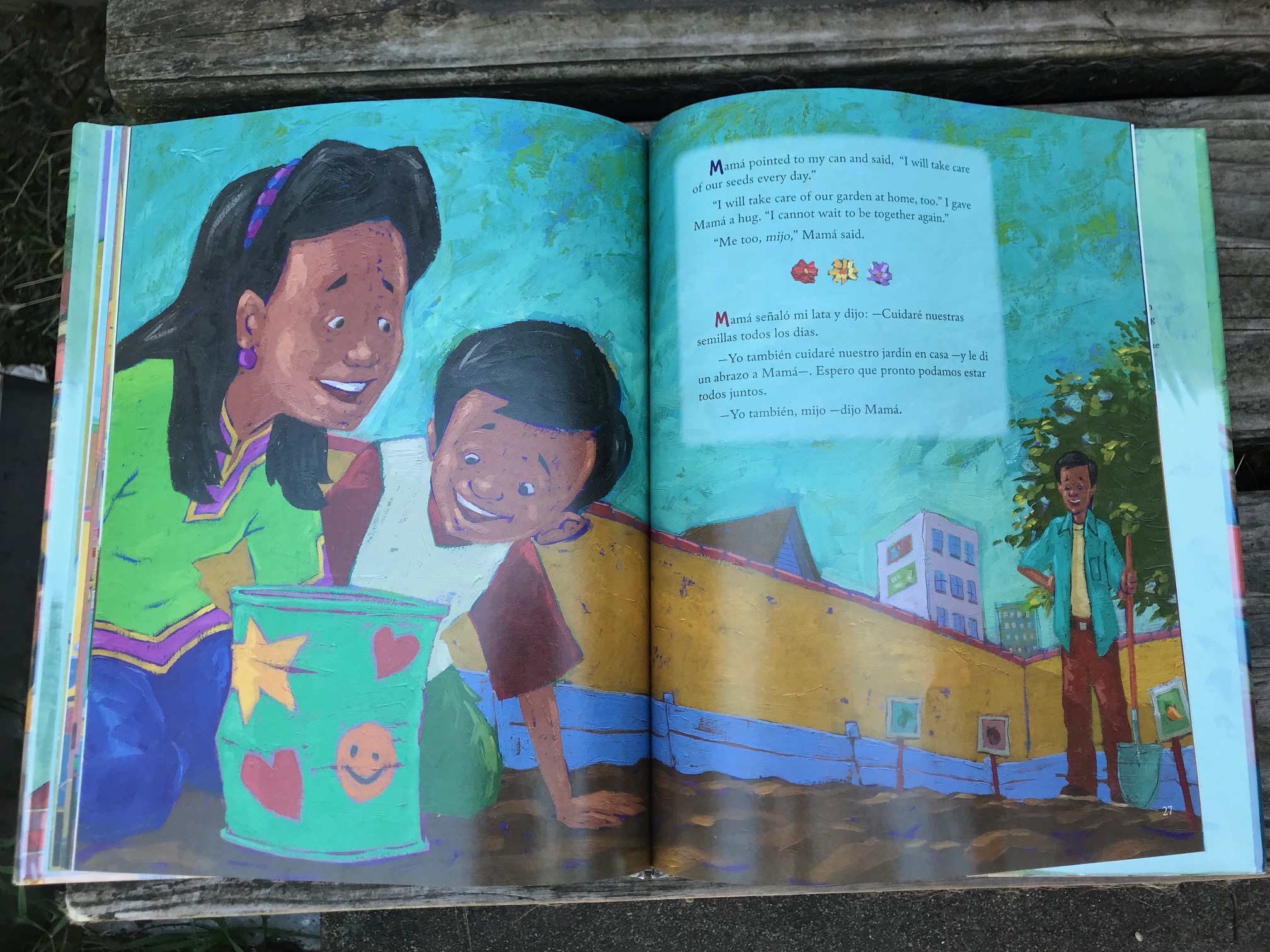
Summary: From North to South is the heart-wrenchingly honest account of a little boy whose mother is deported to Mexico for not having the right papers. He goes to visit her in Mexico and wonders, when can she come home to me? José plants seeds with the other children in the deportation refuge and the experience helps him to feel closer to his mama, who he hopes will come home to be with his family soon.
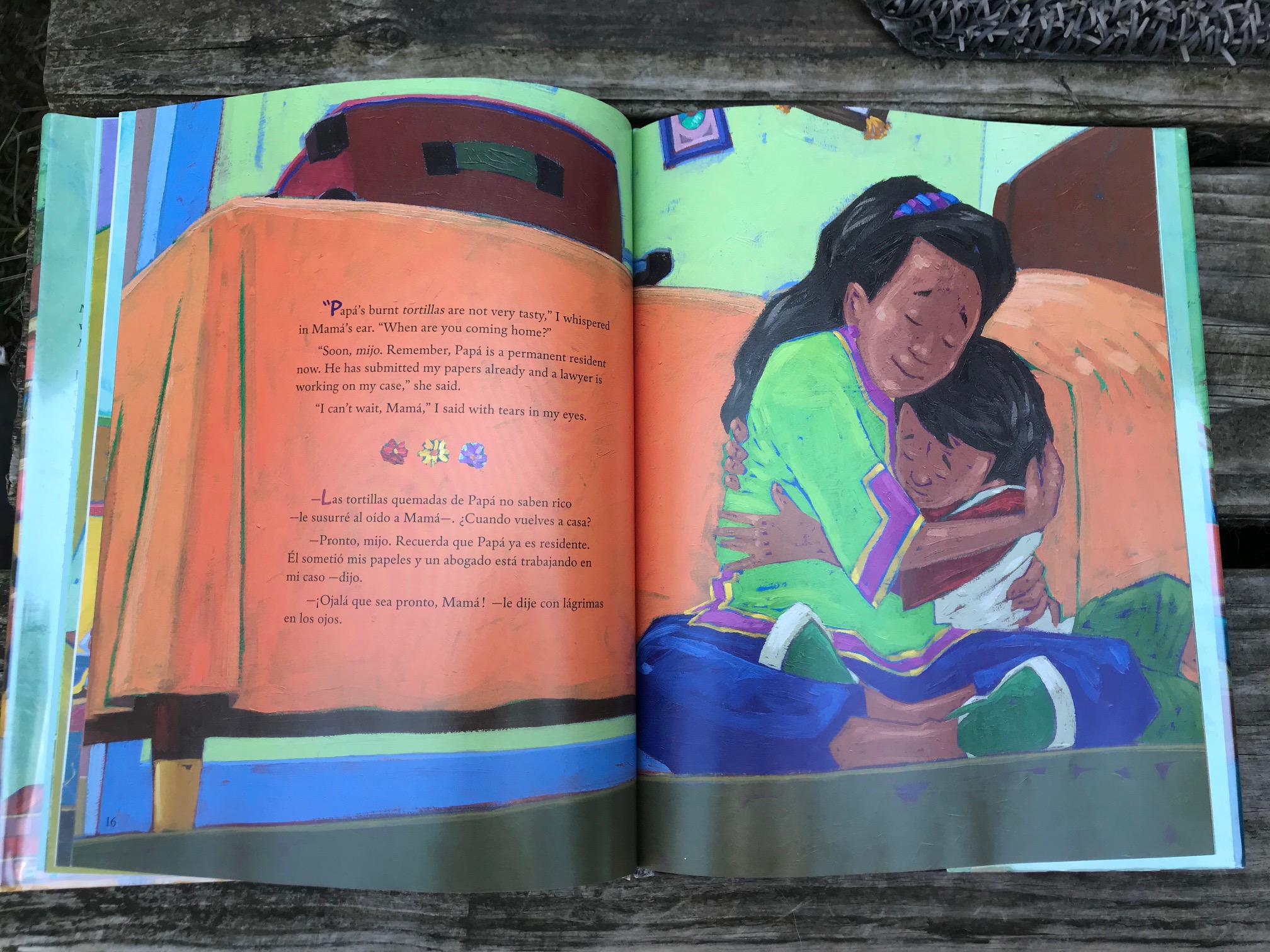
We can feel José’s closeness to his family here: him hugging his father close after losing his mother.
Connections:
Multicultural
literacy
Taylor
(2000) reminds us that although it may seem safe to say that we don’t “see race”,
this approach which is known as color-blind racism, “…disregards the influences
that have affected the life of the learner. It also discourages teachers and
students from seeing the world from more than one perspective,” (pg. 25). A
book like From North to South takes a
story that most people in the world are familiar with – feelings of sadness at
being separated from your family – and introduces an important element: what if
the reason you were separated from your family was because your family wasn’t
legally allowed to live in the same place as you? This experience is common for
many Latino-Americans in the United States, and it is important for this
reality to be represented in text. Not only for those who are currently
experiencing it to be able to be validated and see themselves in literature
around them, but also to give a unique perspective into what it would feel like
to someone who otherwise would not understand. This helps others to understand
and, “…recognize the diversity that defines and strengthens our society,”
(Taylor, 2000, pg. 25).
Although
From North to South tells a story
that may be unfamiliar to many readers, it is a constant reality in today’s world,
especially in the United States. According to CNN, “The Trump administration has identified 471 parents
who were removed from the United States without their children, according to
the latest court filing in an ongoing lawsuit,” (Alvarez, 2019). As sad
as it may be, this is a common experience in the United States. The reality for
many is that their parents are undocumented, in the United States illegally,
and at any moment their parents may be taken away from them. It is not always possible
to go visit these family members either, as those still living in the United
States may be undocumented as well, and may not be able to go back and forth
across the border to visit those who have been deported.
Although From North to South appears at first to be a simplistic picture book, the book tells a story that many Latino-American children may be familiar with, and they can see themselves and their own experiences through the eyes of José, a little boy who just wants his mother to come home to him because he misses her, and because “Papá’s burnt tortillas are not very tasty,” (Laínez, 2014).
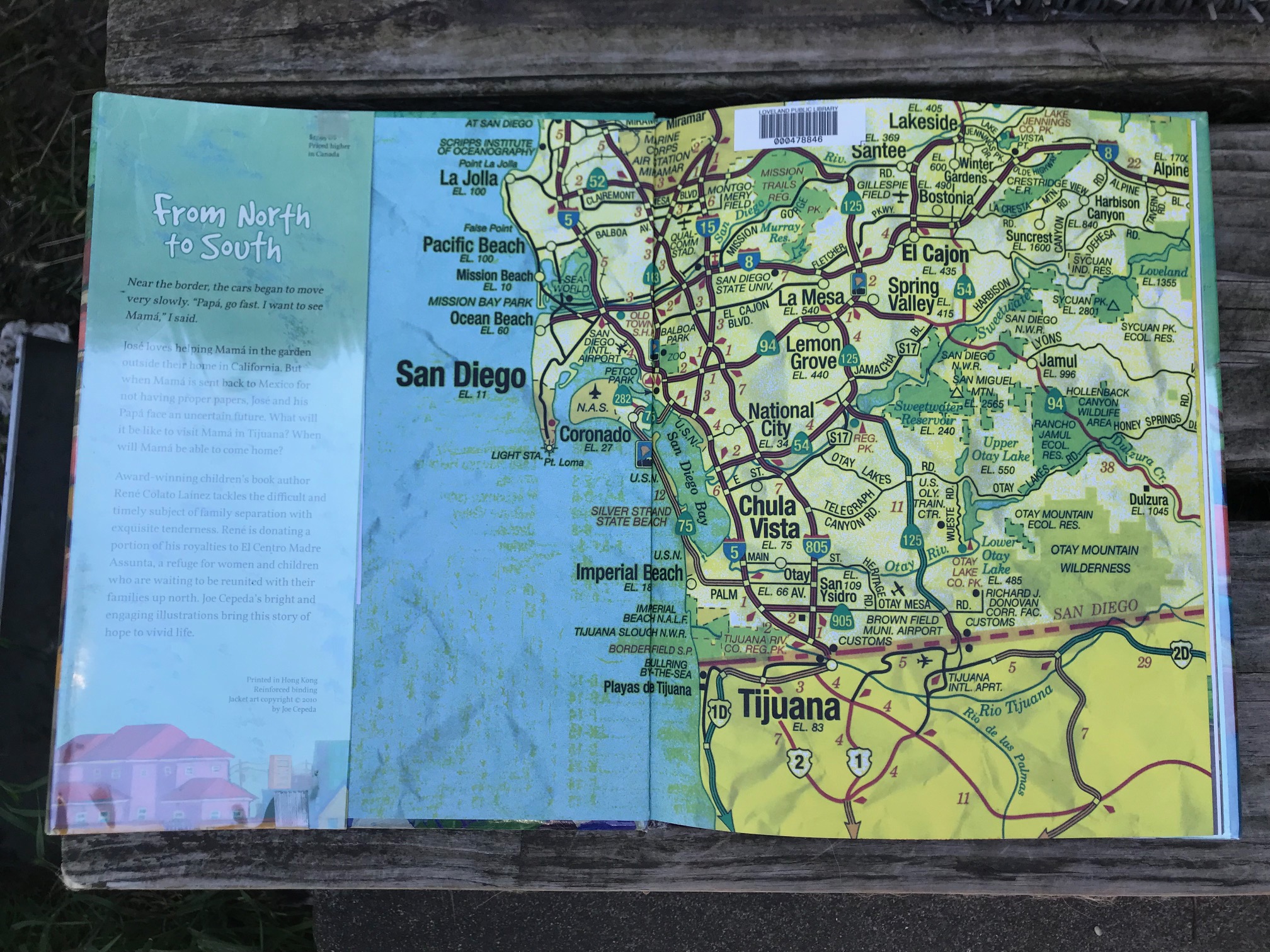
This thoughtfully included map shows just how far Tijuana is from San Diego, making the distance between José and his mother palpable.
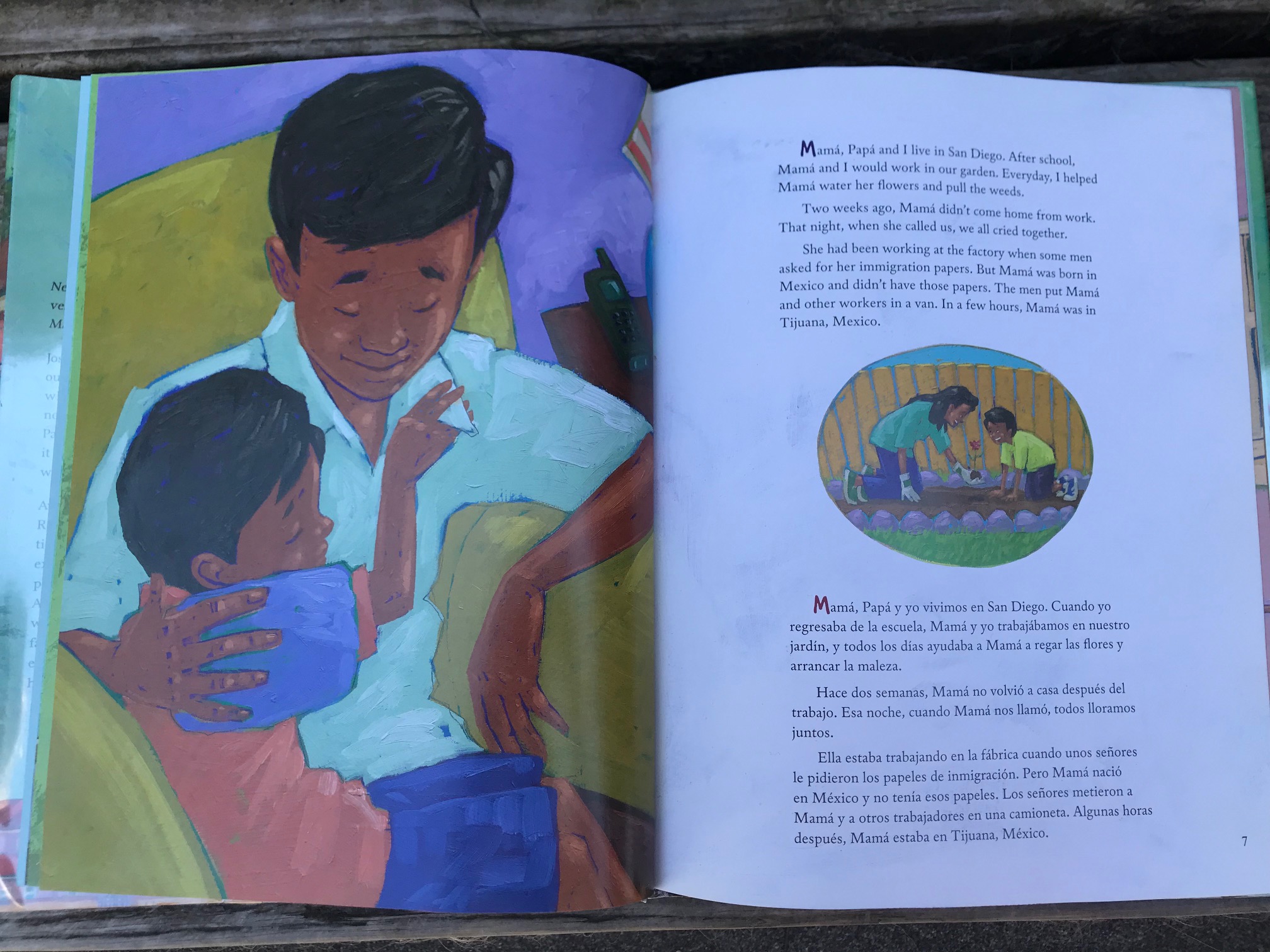
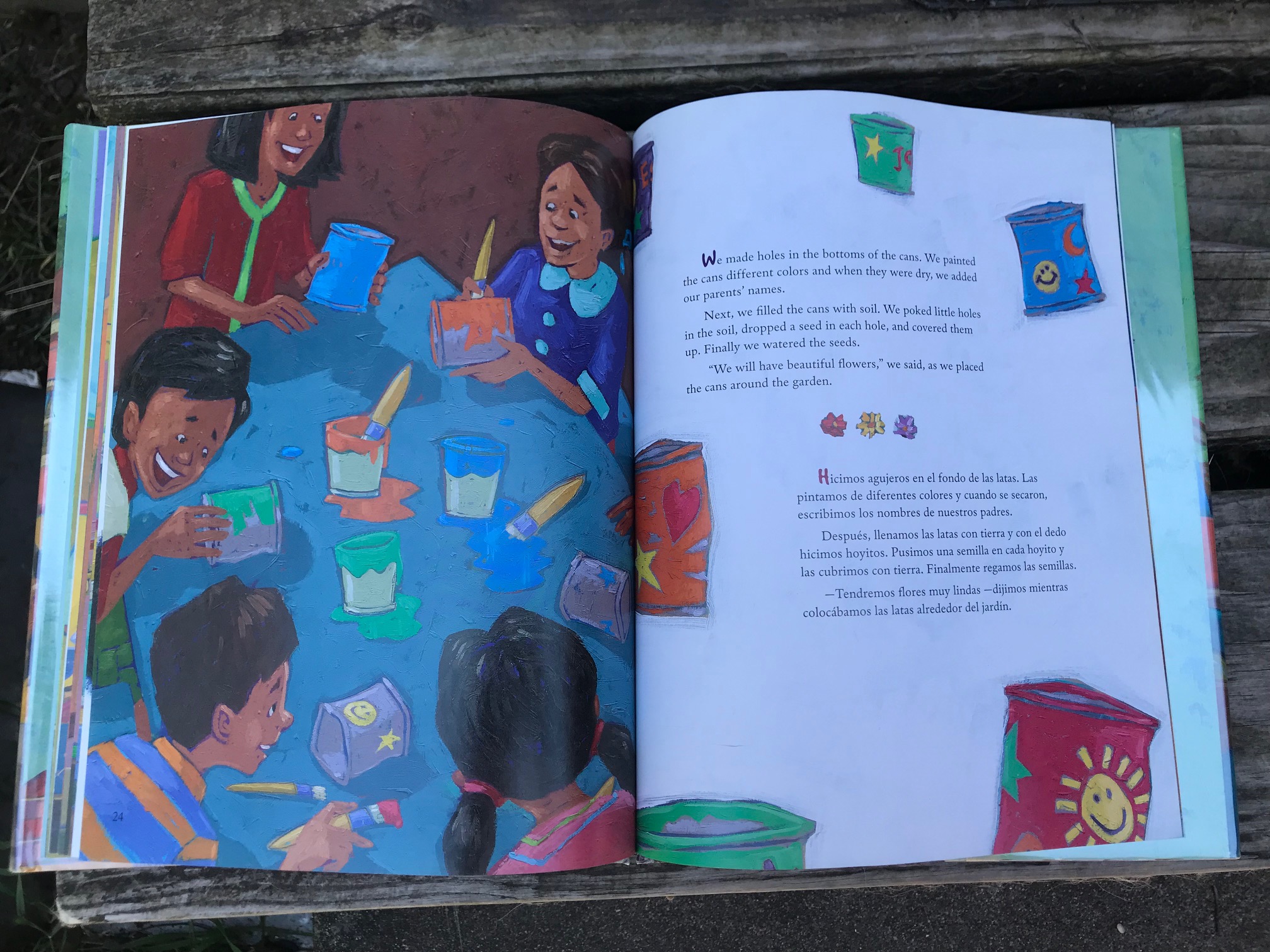
Laínez gives the reader and opportunity to feel what José feels, and without telling the reader how or what to feel about issues of immigration, invites us to think about the high cost of being separated from your family, and how this experience may shape a person going through it. Through the touching description of José planting seeds with his mother and the other children separated from their families, Laínez lets us experience life through a little boy’s eyes: a little boy who just misses her mother and wants to be with her in any way possible.
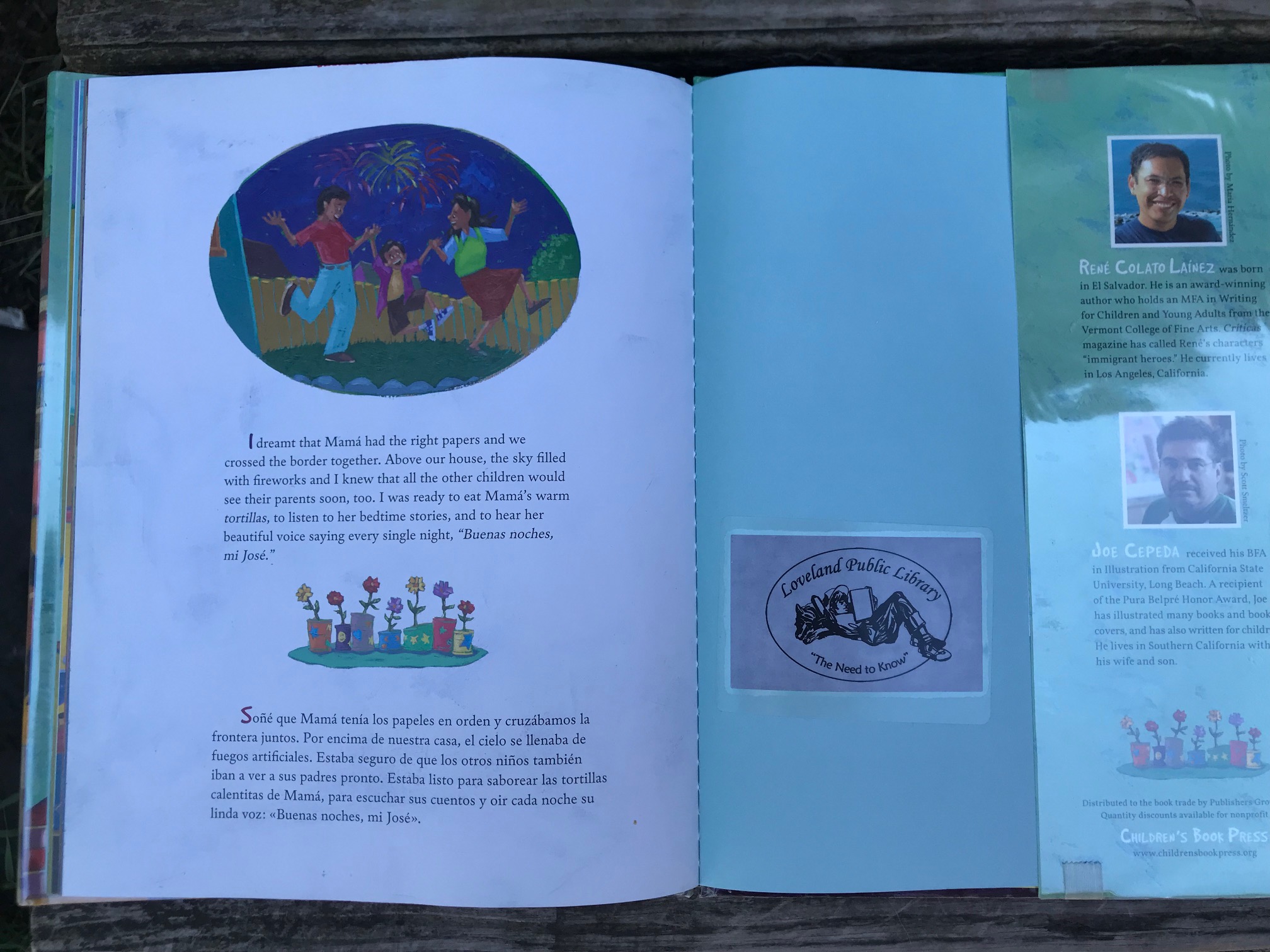
Planting seeds with his mamá makes him feel a little bit more at home, and a little closer to her.
This book is written in both languages – Spanish and English. It has English at the top of each page with a Spanish translation underneath. This makes the book accessible to both English and Spanish speakers/readers which is affirming and powerful for readers who speak one or both languages for both to be able to engage simultaneously. Instead of a Spanish speaking reader having to acquire this book in their native tongue, they have the unique opportunity to read it in their home language alongside English, and to share the book with someone who speaks and reads either language. This could create a powerful experience for a child who speaks Spanish at home and is learning English at school, to be able to share the book with those at home who may not speak English.
Having English and Spanish text both in this book is a powerful way to make the reader able to connect to this book no matter which language they or their family speak and read.
An authentic multicultural book needs to have “Cultural details… represented accurately… these may include the use of dialects or idioms; descriptions of ethnic foods, customs, and clothing; and information about religious beliefs and practices,” (Tunnell, et al. 2016, pg. 203). Laínez creates an realistic experience by using Spanish terminology and language throughout the book, with the main character referring to his parents as papa and mama, his mother and father calling him mijo (son) and adding in Spanish phrases like buenas noches, muchas gracias, hola, and mentioning the bakery where his mother bought her favorite food: pan dulce. Without overwhelming the reader with an abundance of facts about Mexican culture, Laínez is able to construct an authentic viewpoint into José’s world, and to construct a positive and reaffirming message to those in the same situation: we all just want to be with our family, with people who love us and care for us.
Family is the most important, and we can feel José’s longing to be with his mother through Cepeda’s skillful illustrations.
Visual Elements
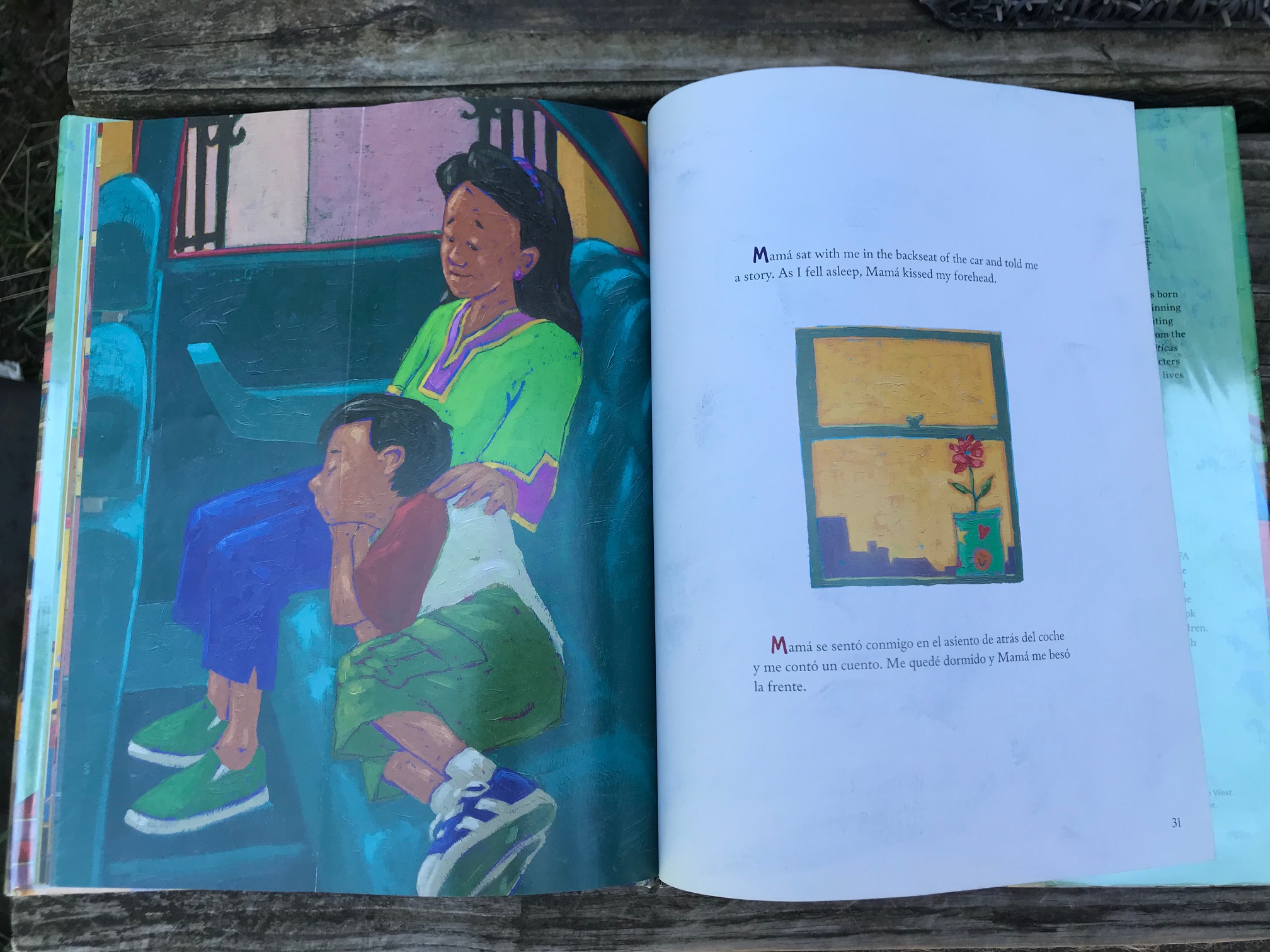
Illustrator Joe Cepeda is a master at depicting action through the use of line in this book. José is shown throwing his arms up in the air in excitement at the idea of getting to finally see his mother, shown running toward his mother with open arms – her eyes wide in anticipation of hugging her son, and he is shown embracing his father and his mother in various scenes, eyes closed, creating a sense of closeness, warmth, and love. Cepeda’s paintings feature soft edges, making a scene that might be frightening to young readers (being separated from those they love) a little less scary, while still feeling realistic. Cepada uses bright colors to help the reader to feel the joy that José feels in seeing his mother and how beautiful the flowers his plants in decorated cans really are. The illustrations in this book draw the reader in and really show us the feelings that José is experiencing – his sadness, his happiness, and his longing to be with his mother are all shown – from him sleepily laying across his mother in the car, to his imagined celebration with his mother and father in the same place under colorful, exploding fireworks – all help to establish the setting and reinforce the overall mood. This book is about family at its core, and without Cepada’s illustrations, we wouldn’t be able to as accurately put ourselves in José’s shoes.
José cannot contain his excitement at being able to finally go see his mother!
Contemporary realistic
fiction
Even
though Laínez’s book is not a true story, it is a very realistic depiction of
what it feels like to be separated from your family. Contemporary realistic
fiction resonates with a reader because they can see themselves inside of the
story – the characters are relatable, and although they offer us a new
viewpoint, the central message is the same. Readers can relate to the
underlying theme of family in this
story, while opening up to what it feels like to be away from someone you love
very much. Whether it is your parents, grandparents, aunts, uncles or cousins –
most people can relate to what it feels like to have someone they love live
somewhere else, which makes this story relatable even though it tells one very
specific story: separation due to deportation.
The
exact numbers vary and are hard to find, but hundreds of families face this
exact situation in the United States. Whether deported after already being in
the country for a number of years like José’s mother, or separated at the
border, this is something that is happening daily in America. Jordan, M. and
Dickerson, C. report: “Returning children even to eligible parents has been
messy and has revealed challenges facing the government as it complies with the
judicial order. For example, reunifications at the Port Isabel detention center
in South Texas screeched to a halt on Sunday after it was locked down for five
hours, according to Carlos Garcia, an immigration lawyer who was prevented from
entering the building to meet with his clients. The lockdown resulted from an
accidental miscounting of detainees there, Mr. Garcia said. It was only the
latest hiccup at Port Isabel, where parents, children and their advocates have
had to wait for hours, or even days, for reunification. ‘It’s a mess,’ a person
familiar with the reunification process said on Tuesday, adding that “the wait
times have been enormous,” (2018). A woman interviewed in the same article said
that she didn’t believe that reunification with her children would occur – at all.
This uncertainty is painful for so many who have been distanced from those that
they love, and the process to be together again as a whole family is a
difficult and long road.
José just wants to be with his mamá.
We often hear stories from adults in this situation, but Laínez’s book gives us a realistic look into what it feels like as a child to not know when your mother is coming home. Tunnell, et al. explain: “The events and characters of contemporary realistic fiction flow from the author’s imagination… writers of contemporary realistic fiction observe life around them to tell their stories, often drawing on their own backgrounds,” (2016, pg. 138). Laínez no doubt takes his own life experience from being an elementary school teacher to children with similar experiences, and his own experience of being an immigrant in America into his own book, to create one that is realistic, believable, and moving, as we experience a full range of emotions from excitement, to joy, to loss and longing, all through José’s eyes.
Laínez, R. C.,
& Cepeda, J. (2014). From North to South (Del Norte al Sur). San Francisco,
CA: Childrens Book Press.
Taylor, S. V.
(2000). Multicultural is Who We Are: Literature as a Reflection of Ourselves.
TEACHING Exceptional Children, 32(3), 24-29. Retrieved July 4, 2019.
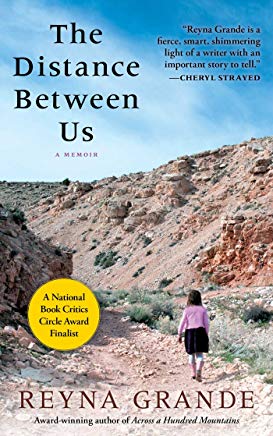
Author overview: Reyna
Grande is an award-winning author who grew up in Iguala, Mexico and later
immigrated to the United States illegally when she was just 9 years old. Grande
was raised by her grandmother in Mexico in absence of her mother and father,
who both left separately to go to El Otro
Lado – the other side – The United States of America. After growing up in
extreme poverty and seeing how difficult life had become for her mother,
father, and eventually her siblings whom she crossed the border with, Grande
understood deeply the importance of education, especially when living in
America. Grande was the first in her family to graduate college, getting her
degree from the University of California, Santa Cruz. Coming to the United
States as a Mexican immigrant, Grande struggled with the experience of not
knowing the native language of the country she had come to. Grande found herself
in the experiences of other multicultural authors, and found solace also in her
community college in Pasadena, remarking: “As Diana held my hand, I realized I
had been wrong – there are heroes in real life,” (2016, pg. 306).
Summary of book: The Distance Between Us is a beautifully written memoir about the real life
experiences of author Reyna Grande. Written in two distinct parts, Grande
masterfully expresses the deep longing that she felt being left in Mexico by
her father when she was a toddler and then her mother a few years later, being raised
by her family in their absence, and then in part two, her experiences in
America and confronting the fact that life in El Otro Lado was not what she imagined it would be. This
heart-breaking book chronicles what it feels like to be left behind and then
later, what it felt like to be a part of a family that never quite felt like
home. Although this book seems to radiate sadness, this book is an important
look into what it feels like to be promised a better life, and coming to terms
with the sacrifices that have to be made to make that better life a reality.
Connections:
Multicultural & critical literacy
From the very beginning, Grande takes
us inside of the mind of herself as a young child, introducing us to what it is
like to grow up in devastating poverty. Grande lives in squalor; she has no
running water, is constantly infested with lice, threatened by scorpions, her
brother infected with tapeworms. Grande introduces us to the mindset of those
around her that dream of living in America and what it would be like, her aunt
proclaiming: “’El Otro Lado is a beautiful place,’ my aunt said. ‘Every street
is paved with concrete. You don’t see any dirt roads there. There’s no trash in
the streets like here. There are trucks that pick up the trash every week. And
you know what the best thing is? The trees there are special – they grow money.
They have dollar bills for leaves,’” (2016, pg. 38). Her aunt doesn’t believe
that money literally grows on trees in America – but she introduces us to the
belief that in America, getting out of poverty is so much easier than it is in Mexico. Grande also shows us the way that
religion shapes her community – her grandmother believing that her being left
handed was “the hand of the devil and I was evil for using it,” (2016, pg. 43),
her own belief that, ‘”Mago, you shouldn’t eat things from the ground. They’re
bad. They’ve been kissed by the devil,’” (2016, pg. 45).
Grande takes us inside of her world –
giving us the powerful imagery to understand why someone might do what her
family had done, the reasons that they would feel so desperate to escape that
they would leave their family behind. Those who have never experienced what
Grande lived every day: “I saw the banks of the canal lined with trash, the
debris floating in the water, the crumbling adobe houses, the shacks made of
sticks, barefoot children with bellies swollen with tapeworm, the piles of
drying horse poop on the dirt road, the flea-bitten stray dogs lying under the
shade of trees, flies hovering above them…” (2016, pg. 58) can begin to
comprehend why someone would risk everything to leave. The reader can start to
grasp what Mami means when she says, “’But no poverty here can compare to the
poverty we left behind,” (Grande, 2016, pg. 213). Grande takes us into her
world giving us a viewpoint we wouldn’t have unless we grew up in Mexico
ourselves. Even though life is not what imagined it would be: “We no longer had
to wash our clothes in the dirty canal water, nor scrape our knuckles raw from
scrubbing our dresses on the washing stones. And we didn’t have to lay our wet
clothes over rocks until they were hard and stiffened by the sun, which left
them smelling and feeling like cardboard,” (Grande, 2016, pg. 191).
Immigration is a hot topic in America
today, and Grande allows us to see the experiences that would make a person
cross into the United States illegally, and how high the stakes really are. We
follow the story of a young girl who just wants to be with her family – who has
spent many years separated from those that she loves. Grande is able to show us
what would make someone want to leave everyone behind, even if the life that
they’re living is very different than the one they were promised. Grande shows
us how dangerous and scary a border crossing really is – three young children
hiding in bushes, getting caught by la
migra, worrying about being shot out in the open, attempting multiple times
only to finally escape in the middle of the night. She explains through the
eyes of a child the reality of what will happen if they don’t make it: “I
thought he was asleep, but when I got closer to him, I saw the flies buzzing
over him and the big bump on his forehead,” (2016, pg. 135). Even after
witnessing death: Grande knows that she must make it across or she will have to
live without her big sister, the one person that has never left her, and who
took care of her and truly loved her even when no one else was willing to do
it.
Although Grande is willing to risk it
all to leave and be with her family, she offers us a chance to see both sides
of her perspective, and the love of the place that she called home even when it
felt at times impossible to do so. She says: “I saw that [poverty], but I also
saw the velvety mountains around us, the clear blue sky, the beautiful
jacaranda trees covered in purple flowers, the bougainvillea crawling up
fences, their dried magenta petals whirling around in the wind. I saw the
cobblestone street leading up to the beautiful La Guadalupe church, papel
picado of all colors waving over the street. “Don’t you think there’s beauty
here too?’” (Grande, 2016, pg. 58). Throughout the whole book, Grande shows us
what it would be like to be someone who dreamed of something else, who also
struggled with fitting in and adjusting to that new life, and what it is truly
like to leave your old life behind. As she attempts to learn English,
frustrated by the fact that she has to read books suitable for Kindergarteners,
as she tries so hard to do something, anything
that hasn’t been done by Mago first, as she does everything and anything she
can just to desperately get her father to be proud or have someone pay attention to her, we’re drawn into what it would be
like to be a young girl just trying to find her place.
I was instantly drawn into Grande’s
story, because of how shocking but
also believable it is. We’re told the story from a child’s point of view,
starting almost at the beginning of Grande’s life when her mother leaves her to
go to Mexico when she is only five years old. Grande tells us the story in a
simplistic way, but it works for this story because the main character is a
young child. At the same time, she draws us into young Reyna’s story and there
are parts of her experience that anyone can relate to. Even though the average
reader would not have the same dire experiences as Reyna in the book, the
average person can relate to her feelings of distress at being away from her
parents, being teased by other children, and her deep love of Mago (her protector).
Grande’s story would seem outlandish to an outsider if her descriptions weren’t
so powerful, and if immigration to America weren’t still such a hotly debated
topic in the United States today. A father and daughter duo made national news
just recently when their bodies washed up on the coast of Texas; The New York
Daily News reported “The two tragically made headlines after a photo of them
face down in the water caused both heartbreak and horror around the world,
exemplifying the risk families face when leaving their homes for a better life.
It was captured by journalist Julia Le Duc. Martínez and Valeria were swept
away by the current between the banks of Matamoros, Mexico and Brownsville,
Texas,” (2019). Although they were from El Salvador and not Mexico, this
article alone from June 30th of this
year proves that the story of a father and his daughter trying to escape
the life they have to seek a “better” one in America is not uncommon in today’s
world. Grande’s book takes place in the 1980s, but the Department of Homeland
Security estimates that from 1990-2000 “…the total unauthorized
immigrant population residing in the United States in January 2000 was 7.0
million. The total population estimates presented here are somewhat higher than
INS’ previous estimates. In its last set of estimates, INS estimated that the
population was 5.0 million in October 1996; the new estimates produced a total
of about 5.8 million for the same date. Estimated population growth was
variable in the 1990s; on average, however, the population grew by about
350,000 per year from 1990 to 1999, about 75,000 higher than INS’ previous
annual estimate of 275,000 for the 1990s… As expected, California is estimated
to have the most unauthorized residents in January 2000, about 2.2 million, or
32 percent of the national total,” (2019). Based on these numbers, and the
horrors that appear in the news weekly, especially under the Trump
administration – though Grande’s story may initially seem unbelievable to an
outsider, it is an experience that is wholly authentic, and one that readers
everywhere need to know and hear.
This book is an important story for many to read, but
especially for those who might struggle to understand why people would enter
the United States illegally, and those who have family in other countries. I
work in a school that is comprised of mostly Hispanic students, and the
majority of these students have family in Mexico. Many readers would have
different interpretations and different constructions of knowledge after
reading this book. A child with parents who support President Trump and the
Trump Administration and the building of a wall between Mexico and the United
States could have a shift in perspective after reading Grande’s story. They may
better understand why someone would risk it all to come to the United States.
Those with family in other countries who have felt abandoned might better
understand why their parents would have made the decisions they made. Those who
have no experience with these topics may be able to gain empathy for those who are going through it, and a deeper
understanding of varying cultures and cultural norms different than their own.
As a teacher, after reading Grande’s book I more fully understood what it would
be like to be a student in America learning English for the first time. Grande
laments: “I had always liked to read in Mexico, but here in this country the
books for kids my age were very difficult for me to read in English. The only
books I could read were for kindergarteners! Books with big letters and lots of
pictures. I loved looking at the pictures, but the stories weren’t very
interesting,” (2016, pg. 202). Grande pulls me into her mind and what it would
be like to be a student who was very bright in her home language, but had no
way to show it, and her feelings of disappointment when her teacher doesn’t
even bother to read the story she wrote because it’s written in Spanish.
Grande’s book is an incredible example of a book that can be
used to promote critical and multicultural literacy. Grande puts you directly
into her own shoes and how she feels
about everything happening around her, but she also allows you to see the
viewpoints of those around her. When Mago gets in a fight with a girl at
school, Grande says: “Maria didn’t know that Carlos wasn’t trying to protect
Mago. She didn’t know that the previous week Mago’s heart had been broken, and
ever since then she’d been itching to punch something or someone. Maria didn’t
know that only the day before, Mago had hit me because I’d taken her rubber
band without permission to put my hair up into a ponytail. And shed punched
Carlos in the stomach for spilling water onto her math homework,” (2016, pg.
200). She shows us Mago’s life, the life of those back in Iguala too when she
goes home and sees them still living in poverty – her old friends married and
with children, and she shows us insights into Mila, her father, and her brother
as well. She tells us about Mago’s ridiculous debt acquired trying to fit in,
her father’s inability to show her love the way she wants and needs because of
his upbringing, her brother Carlos dropping out of college to “become a man.”
All of these scenarios invite us to look into the cultural norms where Grande
grew up, and to think about what it would be like to live the way she did, and
the way those around her did.
Grande’s book never tells us what we should think about
issues of inequality in other countries (or in America), those in power who
make these situations a reality, whether or not we should be in favor of literal border crossing, gender norms,
abuse, or anything else – but by inviting us into the minds of little Reyna and
her experiences and those around her, she asks us to think about them and draw
our own conclusions.
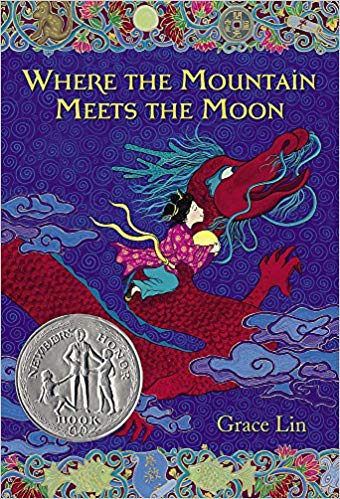
Book: Where the Mountain Meets the Moon by Grace Lin,
winner of the Newbery Honor Award
Book type: Modern fantasy
Author Overview: Grace
Lin is a New York Times bestselling author who recently won a Caldecott Honor
for A Big Mooncake for Little Star.
Grace originally dreamed of being a figure skater, but after realizing her own
talents as an artist, she decided to become an artist instead. Lin is the
illustrator of more than a dozen picture books for children and has been a published
author since 1999. Her own website states: “While most of Grace’s books are
about the Asian-American experience, she believes, ‘Books erase bias—they make
the uncommon everyday, and the mundane exotic. A book makes all cultures
universal,’” (n.d.).
Book Summary: Where
the Mountain Meets the Moon tells the delightful story of Minli, a young girl
living in a remote village in China. Minli’s family is very poor as is her
entire village, because they live at the base of Fruitless Mountain. Fruitless
Mountain is barren, and her parents spend long days working in the mud to
little avail. They have just enough food to get by, a very small home to live
in, and two coins to their name. Minli’s father loves to tell stories, and one
story in particular catches Minli’s attention. He tells her of the Old Man of
the Moon, a powerful magistrate who holds the Book of Fortune. The Book of
Fortune holds the key to everyone’s predetermined fate – but the book can be changed. When Minli realizes
that a person’s fate can be changed by asking the Old Man of the Moon a
question, she sets off on her journey to find him and ask him to help her
family. This book explores what it is like to live in poverty, and the kind of
risks someone might take to try to escape it.
Connections:
Strong, believable characters
In Where
the Mountain Meets the Moon, Grace Lin writes a heart-warming story full of
fantastical characters. Although we meet many characters outside of the
ordinary – talking goldfish, a dragon born from a painting, various stationary
objects with thoughts, feelings and emotions, and even some mischievous monkeys
– the main characters are not only strong and believable, they are familiar and
relatable too. Our main character Minli only wants what is best for her family,
and she believes strongly that what is best is changing their fortune. Her
family is very poor and so are those that surround them, and she wants her
family to be happy. Her father loves to tell stories, and Lin says, “What kept
Minli from becoming dull and brown like the rest of the village were the
stories her father told her every night at dinner. She glowed with such wonder
and excitement that even Ma would smile, though she would shake her head at the
same time. Ba seemed to drop his gray and work weariness – his black eyes
sparkled like raindrops in the sun when he began to tell a story,” (2009, pg.
3). Minli is tired of being caked in mud every day and how tired her parents
are as well. They work from sunrise to sunset, and her mother complains
constantly about their poor fortune. Although Minli and her father are placated
by his stories, Ma is not. “’The Old Man of the Moon! Another story! Our house
is bare and our rice hardly fills our bowls, but we have plenty of stories.’ Ma
sighed again. ‘What a poor fortune we have!’” (Lin, 2009, pg. 9).
Minli is a hard worker, but she is
young and full of dreams and tired of working in the exhausting heat, and she
grows sad for her family and their meager possessions. We are reminded that
Minli is still but a child when she spends half of her family’s fortune (just
two coins in a bowl that she was given at birth) on a goldfish that a peddling
man tells her can help her change her fortune. How naïve is she to think that
this could be true! Minli is a relatable character – she is kind and
compassionate, and although her adventures are not the ordinary, every reader
can find themselves inside her – a girl who just wants what is best for her
family and a better life. We see Minli grow over time, from being a character
who just wants riches for her family, to one who realizes that friendship and
those we come to love mean more than jade or gold ever could. We see this when
Minli worries over Dragon when he is attacked by the Green Tiger, but most
importantly when she finally makes it to the Man of the Moon and decides to not
ask him a question about her own family and their riches, but rather about
Dragon and why he cannot fly. Minli realizes when she gets to him that, “Fortune
was not a house full of gold and jade, but something much more. Something she
already had and did not need to change. ‘I didn’t ask the question,’ Minli said
again and smiled, ‘because I don’t need to know the answer.’” (Lin, 2009, pg.
259). Minli realizes the importance of family, love, and friendship and understands
finally that she does not need to change her fate. Rather, she needs to look
inward and be thankful for what she
already has (and had all along!)
Minli’s parents shine as strong
characters as well, and even those without children can put themselves in their
shoes and see their despair at the loss of Minli. Minli’s mother who speaks
constantly of their poor fortune exclaims when she realizes Minli is gone: “’I
spoke too soon,’ Ma cried. ‘Our fortune is now the worst, for our only daughter
is gone!’” (Lin, 2009, pg. 37). We watch Minli’s parents grow over time, as Ma
begins to realize that their fortune really is shaped by love and family and
not by the money in their pockets or the rice in their bowls. Her mother goes
from blaming Minli’s father for telling her fantastical stories to realizing
that it was her and her complaints of their fortune that really set her to run
away. Even though Minli is the main character, we see such growth in Ma as well
as she says, “She was at last able to see that her daughter’s laughter and love
could not be improved by having the finest clothes or jewels, that joy had been
in her home like a gift waiting to be opened,” (Lin, 2009, pg. 253). Lin’s
character development is strong, and we are able to see and understand how Ma
would feel the way she did at the beginning of the book, and also how her
viewpoint changes overtime and she is able to see what is truly important
through the lens of what she had lost.
Six basic fantasy motifs
Tunnell, et al. explain: “Even though
all modern fantasy stories contain some sort of magical element, some stories
have a higher fantasy quotient than others. Madsen (1976) identifies six basic
fantasy motifs; if a story contains all six, it is either a classic fairy tale
or an example of modern high fantasy,” (2016, pg. 126).
Lin’s book contains all six. It has
elements of magic – the king of the
City of Bright Moonlight turning the peach pit into a peach tree that actually
consisted of the merchant’s peaches, strings of destiny, the rope bridge made
from the kite strings, magical tea that cured the wounds of the Green Tiger,
and Moon Rain. Where the Mountain Meets
the Moon also contains other worlds;
rivers where goldfish can talk and aspire to get through the Dragon Gate, a
forest full of greedy monkeys that want all of their peaches for themselves,
the Inner and Outer City of the City of Bright Moonlight, and most importantly
of all – Never-Ending Mountain, where the Man of the Moon lives and where Wu
Kang must try to cut down a magical tree that continues to regrow, every single
night until he learns his lesson about patience. The story also contains good versus evil – Green Tiger full of
angers tries to wreak havoc on the Da-A-Fu twin’s village, and he asks for
children to be sacrificed to him or else he will continue to kill livestock and
haunt the town with his evil. However, the twins knew that they could not fight
the tiger’s anger with anger of their own, and instead turned his anger inward
on him, forcing him down into a well and saving the town from his pain. We have
heroism as well, as Minli is called
to adventure by her talking goldfish, ventures in the wild to face danger (the
monkeys and more!) protected by Dragon, matures over time learning the
importance of friendship as she meets and comes to love Dragon, the boy with
the oxen, the King, and the Da-ah-Fu twins and misses her family deeply, and
then finally returns to her village after meeting the Man of the Moon and
learning how she can help Dragon to fly. We have many special character types ranging from Dragon who came to life from a
painting, the Man of the Moon who holds the Book of Fortune, Green Tiger, and talking
door knockers. We see fantastic objects as
well – a book that holds people’s fates and the string of destiny (both borrowed lines) most notably.
Critical Literacy
Without
telling us explicitly to do so, Grace Lin asks us to carefully think about poverty in our society, and the kinds of
things that not having what we desire or see to be what we need might make a person do. Minli, feeling that she is missing out
on the riches of the world – driven by her mother who feels the same – is willing
to leave her village and family and venture out into a world she does not know
to ask a mythical person whom no one has
ever seen or spoken to, in order to change her family’s fate. This book asks us
to look at our society – one that is so often framed by wanting more. Lin examines this throughout the entire book by introducing
us to characters who invite us to think deeply about what it means to be poor
or to be rich. When Minli meets the orphan boy with the oxen, she feels sad for
him, thinking that he has nothing. However, “As Minli looked at the buffalo
boy, aglow with happiness against his poor surroundings, she saw it was enough
for him. More than enough, as the smile that kept curling up on his face told
her,” (Lin, 2009, pg. 114). The orphan boy laughs and won’t accept Minli’s
money – he has plenty. He has a friend and his buffalo, and he loves them, and
that is enough for him and more than any money could ever buy. Lin, without
telling us to do so, invites us to look at life through another lens. What is
it like to have what some would consider nothing
and still be content? Is it possible to be rich with friendship and love instead of money? How do those in power shape
our realities into thinking that what we need is money and valuables in order
to be happy? How does capitalism shape how we feel about what we have and what
we don’t have?
We see this theme over and over again
told through Chinese proverbs, which Lin explains in the back of the book are
partially real and partially imagined by her. Asian American’s voices are often
silenced – we don’t see a true representation of Asian Americans in film or in
literature, and reading these powerful folktales like the one of Wu Kang – a man who had more than anyone
could ever need – a comfortable life and loving family but always wanted more asks us to think about why we don’t know more
about Asian culture and these beautiful and thought-provoking stories. Even the
Da-ah-Fu twins ask us to think about what our society and culture values – as their
ancestors home was in threat of being destroyed by the greedy magistrate who
wanted to know the secret to happiness, which we find out later was simply thankfulness. Lin asks us to think about
this – why as a culture are we always trapped in this feeling of wanting more and how can we become more
grateful for what we already have? Can
we not be rich with love and family?
This book is a truly incredible book for inviting children to take a look into lives we don’t usually see – poor villagers in China – and asking what it really means to have enough. Should we feel sad for those we feel don’t have enough, or do the secrets to happiness really lie deep in the heart?
Book:
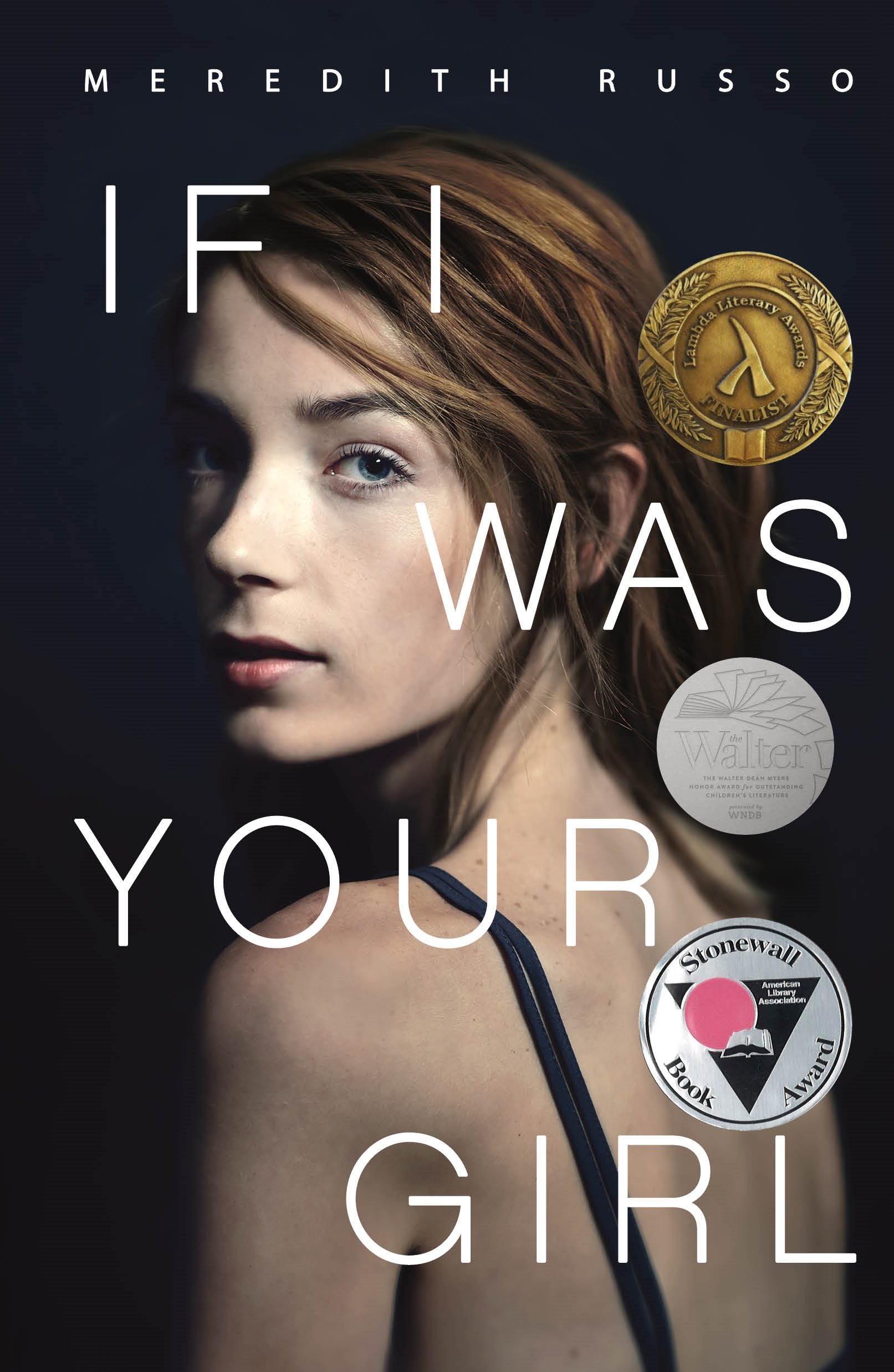
If I Was Your Girl written by Meredith Russo, Stonewall Book Award Winner &
Walter Dean Myers Honor Book for Outstanding Children’s Literature
Book type: Contemporary realistic fiction
Overview of the author: Meredith Russo has a very authentic and unique viewpoint
to bring to writing a novel about a transgender teenager and the experience of
what it feels like to grow up in what feels like the “wrong” body,
being that she is a transgender woman herself. Russo’s novel takes place in the
deep south and what it would be like to live in a place that is not quite
progressive enough to accept you for who you are, which makes sense given that
she was born, raised, and currently resides in Chattanooga, Tennessee. Russo
began transitioning in 2013, and therefore understands and remembers the
experience of coming into her own as her true self, an experience that Amanda
goes through in If I Was Your Girl. According to her publisher, Macmillan, “If
I Was Your Girl was partially inspired by her experiences as a trans woman.
Like Amanda, Meredith is a gigantic nerd who spends a lot of her time obsessing
over video games and Star Wars,” (2019).
Summary: If I Was Your Girl is a young adult novel about Andrew,
who starts over her life as the person she always wanted to be (and felt in her
heart that she was), Amanda. Relentlessly bullied at her old school, Amanda
tries to commit suicide. After the attempt, she moves to her father’s house six
hours away from the high school she previously went to, full of students and
adults alike who don’t know her story, giving her the chance to live her life
as the person she always dreamed of being. Amanda’s goal is to keep her head
down and just make it through senior year, graduate, and move as far away from
the south as possible for college. Amanda’s dreams of “keeping her head
down” don’t really pan out though, and she finds herself making new
friends, getting her first boyfriend, and actually fitting in for the first
time in her life. However wonderful this sounds, Amanda has a deep, dark,
secret, and she wonders: who can I tell, if anyone, and when?
Connections:
Contemporary realistic fiction
Russo’s
book is an exceptional work of contemporary
realistic fiction, falling into the category of a problem novel. Technically, all novels have some sort of “problem”
that relates to the story, however: “…the term problem novel grew out of the
age of new realism, when taboo topics became acceptable fare for juvenile
books,” (Tunnell, et al., 2015, pg. 142). If
I Was Your Girl mainly deals primarily with the topic of being a
transgender person in society, which includes many subtopics that might
traditionally be considered taboo: gender identity, social acceptance, bullying
involving emotional and physical abuse, attempted suicide, religious skepticism,
drug use, and Amanda’s feelings that
her gender identity caused her parents to divorce. Amanda herself deals with a
lot of emotional issues, such as feelings of isolation, depression, anxiety,
and abandonment; to the point that she tries to commit suicide. These are not
topics that would have been acceptable in literature in the past. Tunnell, et
al. explains this as, “The harsher parts of life simply had not been given
center stage in books for young readers until then [the 1970s]. When the taboos
lifted, new books spewed forth problems and realities previously unseen in
children’s publishing,” (2015, pg. 140).
Although
If I Was Your Girl handles themes
that many young readers may not be able to personally relate to, Amanda is a
character who experiences many of the things that the average teenager in high
school would experience, and she is a relatable character even though she is
one going through an experience that most people would not – transitioning from
being male at birth to female at 18 years old. Amanda experiences depression, and
she places us directly in her shoes when she says things like, “I wondered if
Bee knew how privileged she was to be able to feel anything at all, if she knew
just how scary numbness could be. How it felt, sometimes, like a darkened room
with no way out,” (Russo, 2018, pg. 41) and “I wished I could walk up into the
sky and live on some distant planet, far away from the things I was afraid of.
I wondered if joy could ever be felt by itself without being tainted with fear
and confusion, or if some level of misery was a universal constant, like the
speed of light,” (Russo, 2018, pg. 66). Many adolescents in the United States
struggle with depression. According to The National Institute of Mental Health
Information Resource Center, “An estimated 3.2 million adolescents aged 12 to
17 in the United States had at least one major depressive episode. This number
represented 13.3% of the U.S. population aged 12 to 17,” (2018). Those
grappling with depression would read this book and feel not alone when reading Amanda’s
thoughts, and those who do not would gather authentic insight into what it
would feel like to be.
Russo’s
book takes place in the Bible Belt South, which is important for themes in the
book about what it would feel like to be Amanda in a place where it is
generally not accepted to be transgender. However, Amanda’s experiences in high
school are often universal. She describes her new school as, “Fluorescent
lights buzzed angrily, but for all their fury, the halls were dimly lit.
Display cases lined the walls, shelf after shelf of trophies for cheerleading,
marching band, baseball, and especially football, with records reaching back
far enough that half the team photos were sepia-toned. The red classroom doors
bore faded-looking number, and I followed them to 118, the homeroom marked on
my schedule” (Russo, 2018, pg. 13). When framed this way, Amanda’s school could
be anywhere. Her descriptions of high school classes, parties, football games,
trying to make friends, and the feeling of just trying to fit in are universal feelings that resonate with most, if
not all young adult readers. Contemporary realistic fiction draws a reader in
because it is familiar, it reminds them of their own experiences, and though
Russo’s book has undertones unfamiliar to many readers, there are enough
similarities for anyone to draw on their experiences and connect to it in their
own personal way.
Critical literacy
Russo’s book asks us to take a look
into what it would feel like to be a transgender person – someone who is living
a life that bends the rules of what many in society deem to be normal and
acceptable. Russo does this in very powerful ways; she does not tell us what it would feel like to be a
transgender person, but instead invites us into Amanda’s own brain and
describes the situations that unfold around her.
The reality is that in many places in
the United States, it is not acceptable to be a person who has decided that
their birth gender is incorrect, and there are many socially ingrained ideas
about what being either gender is supposed to mean and entail. Amanda
experiences many micro-aggressions at the hands of people who do not know her
own personal experience, and who have these held beliefs. There are many
examples of this throughout the book, but one of the situations that stood out
the most to me is when Amanda is at a party and she overhears a conversation
where a popular boy at the school, Parker, refers to a boy who moved away as “Grant’s
little gay boyfriend,” (Russo, 2018, pg. 57). Grant, another students, defends
him, and gets a reply of “’Yo Grant,’ he said. ‘The new girl know you’ve got a
vagina?’” (Russo, 2018, pg. 58). Parker makes these comments because the boy in
question, Tommy, acted and dressed differently than what was considered to be
the “norm” where they lived, placing him into a box of being labeled as
homosexual. Grants defense of him gives him traits that are societally
associate with females: compassion and caring – therefore Parker tries to
insult him by calling him a girl, asking him if he has a vagina. Overhearing
this, Amanda “…flinched as if I’d been struck. I wondered why people still made
comments like that. I wondered when I’d stop caring,” (Russo, 2018, pg. 58). This
leads Amanda to reminisce about a time when she was a child and wrote a story about
being a woman when she grew up, and how her dad responded to it. Her dad was
another person who believed in traditional gender roles – Amanda describes this
as “When he tried to do boy things with me he always frowned and stopped, so I
did not think he wanted a son really, which was fine because I hated sports…”
(Russo, 2018, pg. 61) and “I looked at my shoes and felt myself starting to
cry, which was a bad thing because Dad said crying was for girls,” (Russo, 2018,
pg. 63). Amanda’s dad believes that boys play sports and girls cry, a view that
is held by many still as traditional gender roles dominate our society, which
began to cause a rift in what Amanda believed about herself. Russo invites us
to think about this from our own perspectives. Seeing into Amanda’s
experiences, the reader begins to think about those gender roles, and we can
begin to imagine what it would feel like to be someone who desperately wanted
to fulfill them to meet their family and society as a whole’s expectations, but
continually failed to do so, simply because of who they were as a person.
Russo invites us to think about a lot
of ideas that are held in society, such as when Grant is afraid to tell Amanda
that he has a beat up car, feeling like not being able to give her a ride will
make him “less manly” and how he is afraid to invite her into his home because
of his low socio-economic status. Amanda remembers times that she was beat up
and called a “faggot” for the way she acted and dressed, Chloe crying the first
time she kissed a girl because she grew up thinking that she was the “only
person like her” when she realized that she was gay, Anna’s problems with
cognitive dissonance coming from her parents strict religious upbringing and
her deep love and acceptance of her friends anyway, and her parents coming to
terms with the loss of what they thought was their “son” and what it means to
instead raise a daughter.
Russo’s character Bee forces us to take
a long hard look at what people think and believe, especially in a religious
Deep South town, and how many people have to hide who they really are. Bee says
things like, “Everybody’s too afraid of going to hell or getting made fun of to
be honest about what they want and who they are, so they can’t even really
admit what they want to themselves. It’s sad,” (Russo, 2018, pg. 163). Russo
never tells us who is right and who is wrong, but instead creates diverse
characters struggling with all kinds of issues that revolve around hiding who
they really are because of fear of rejection. She asks us to think about
dominant structures in society, and what it would feel like to be silenced.
Amanda reads the bumper stickers on Anna’s parent’s car that read things like: “JESUS
WAS A CONSERVATION, one read, and RIGHTS COME FROM GOD NOT GOVERNMENT; ILLEHAL
ALIENS! EXACTLY WHICH PART DID YOU NOT UNDERSTAND? And I CAN’T HELP THAT I’M
HOMOPHOBIC… I WAS BORN THAT WAY!” (Russo, 2018, pg. 82). Russo shows us both
sides of the story, so that we can understand why different characters believe
the things they believe and act the way they act – due to fears of rejection,
wanting to fit in with their peers, and their own long held family beliefs.
Instead of telling us that one way of thinking is wrong, or one is right: Russo
invites us into the lives of many different multifaceted people and allows us
to draw our own conclusions.
Without explicitly doing so, Russo asks
us to think about those whose voices are often not heard: transgender,
homosexual, bisexual, struggling with religion. She invites us to think about
why those voices are silenced, while placing us directly in their shoes and
showing us what it feels like to be marginalized by those in power. Books
written from the viewpoint of a transgender person are not commonplace, and
this book provides an excellent alternative account of what it would be like to
experience high school. Russo’s book If I
Was Your Girl is a social issue book, which Lewison, et al. (2002) describe
as, “…books [that] make difference visible, give voice to those traditionally
silenced, explore dominant systems of meaning in our society, question why
certain groups are positioned as others…” (pg. 3). This book could be used in a
classroom in many very meaningful ways. In a safe classroom environment,
students could ask questions about why we treats others who behave “differently”
the way we so often see, what kinds of systems could be put in place to prevent
bullying, what gender identity means, how to be a good friend to someone who is
experiencing feelings of isolation or depression, and more. Students can
question Russo’s book and the alternate experiences that are not mentioned:
what would it be like to be Amanda if she weren’t beautiful and passing as a woman? What is the
experience of the transgender teenager who doesn’t have (at least somewhat)
supportive parents? What is it like to be a transgender male versus a
transgender female, and how would their experience be different than Amanda’s?
What is it like to be a teen who cannot afford hormone replacement or gender
reassignment surgery? What is it like to be transgender in a place like New
York City, versus the Deep South?
Russo’s book lets us in on one experience as a transgender female and
those around her, but it invites us to think about other scenarios and
experiences as well. Russo’s book gives us a unique perspective on an issue
that many of us may not have thought about, if we aren’t transgender ourselves.
Russo gives us the power to question dominant viewpoints in society, and it is
our job to take our new understandings of the world around us, and transform
them into positive change.
References:
Lewison, M.,
Flint, A. S., & Sluys, K. V. (2002). Taking on Critical Literacy: The
Journey of Newcomers and Novices. Language Arts,79(5).
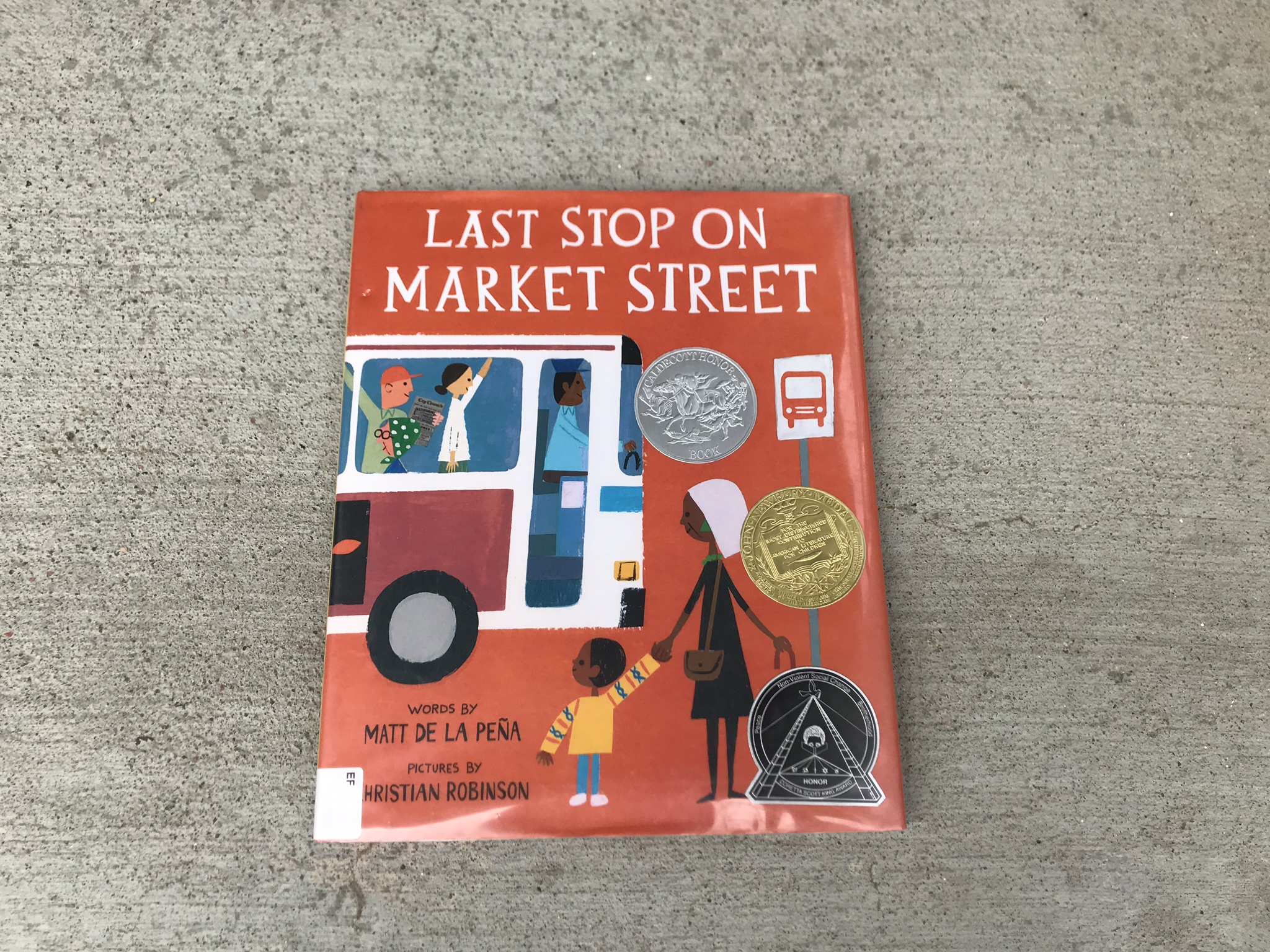
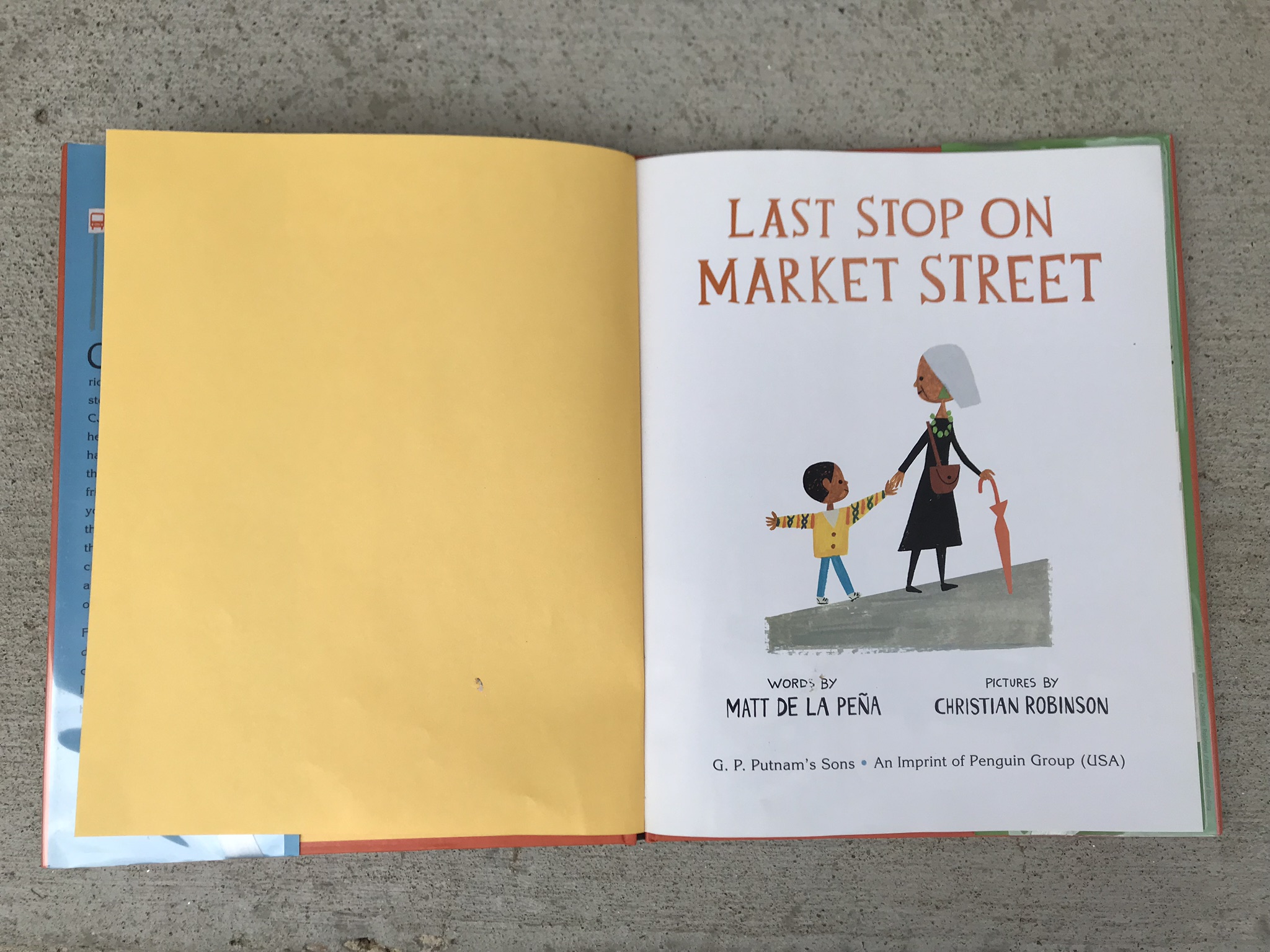
Book: Last Stop on Market Street by Matt de la Peña illustrated by Christian Robinson, A 2016 Caldecott Honor Book, 2016 Coretta Scott King Illustrator Honor Book, New York Times Book Review Notable Children’s Book of 2015, Wall Street Journal Best Children’s Book of 2015
Focus of Book: Contemporary realistic fiction,
picture book
Overview of author: Matt de la Peña is an award
winning author of children’s and young adult literature, who describes himself
as a basketball junkie. De la Peña figured out when he was younger that he had
a better chance of being able to get a scholarship to college due to athletics
than academics, so that was the road that he took. He does say that he,
“wrote secret spoken word poetry in the back of class,” and that he
was influenced heavily by his 11th grade English teacher who, “told me I
was a great writer. And even though I didn’t believe her at the time, I loved
her class,” (Bartel, J., 2015). De la Peña is half Mexican and half white,
and he says that it, “puts me in an interesting place in the call for more
diversity in books for young people,” (Bartel, J., 2015). De la Peña
writes about diverse characters in a way that race is evident, but not the
entire plotline of the story – writing stories about social issues with themes
of race, class, inequality, poverty, and more, through a lens that is accessible
to younger readers.
Overview of illustrator: Christian Robinson is an
award winning children’s illustrator who has also worked as an animator with
Pixar and The Sesame Street Workshop, who always loved creating when he was a
child. He says, “Creativity allowed me to be in charge, to make my own
rules, and create my own little world on paper,” (2018). Robinson says he
loves to make collages, and that Last Stop on Market Street was made with a mix
of paint and collage, and that his enjoyment comes from trying out all kinds of
new things and techniques.
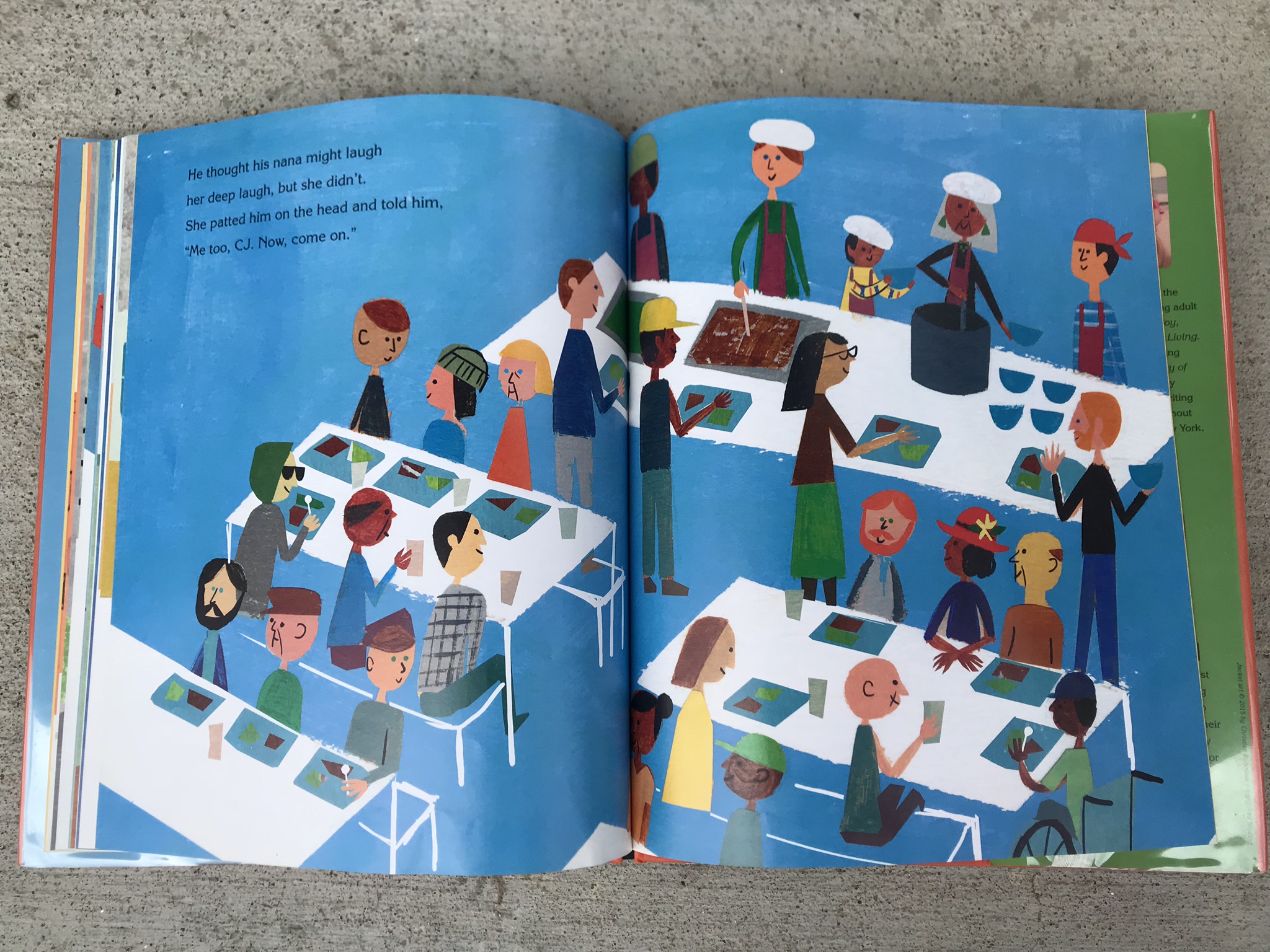
Summary of the book: Last Stop on Market Street is a book about a little boy who takes the trip with his grandmother after church to volunteer at a soup kitchen. He spends the trip pondering various questions out loud to his grandmother: why don’t they have a car? Why do they have to go somewhere after church every Sunday? Why are some people blind? Why does the area of town that the soup kitchen is in look so run-down and dirty? His grandmother answers his questions thoughtfully and beautifully, and allows CJ to see the world through a lens he was not previously used to looking through.
CJ in the soup kitchen with his grandmother at the end of the book.
Connections:
Contemporary realistic
fiction:
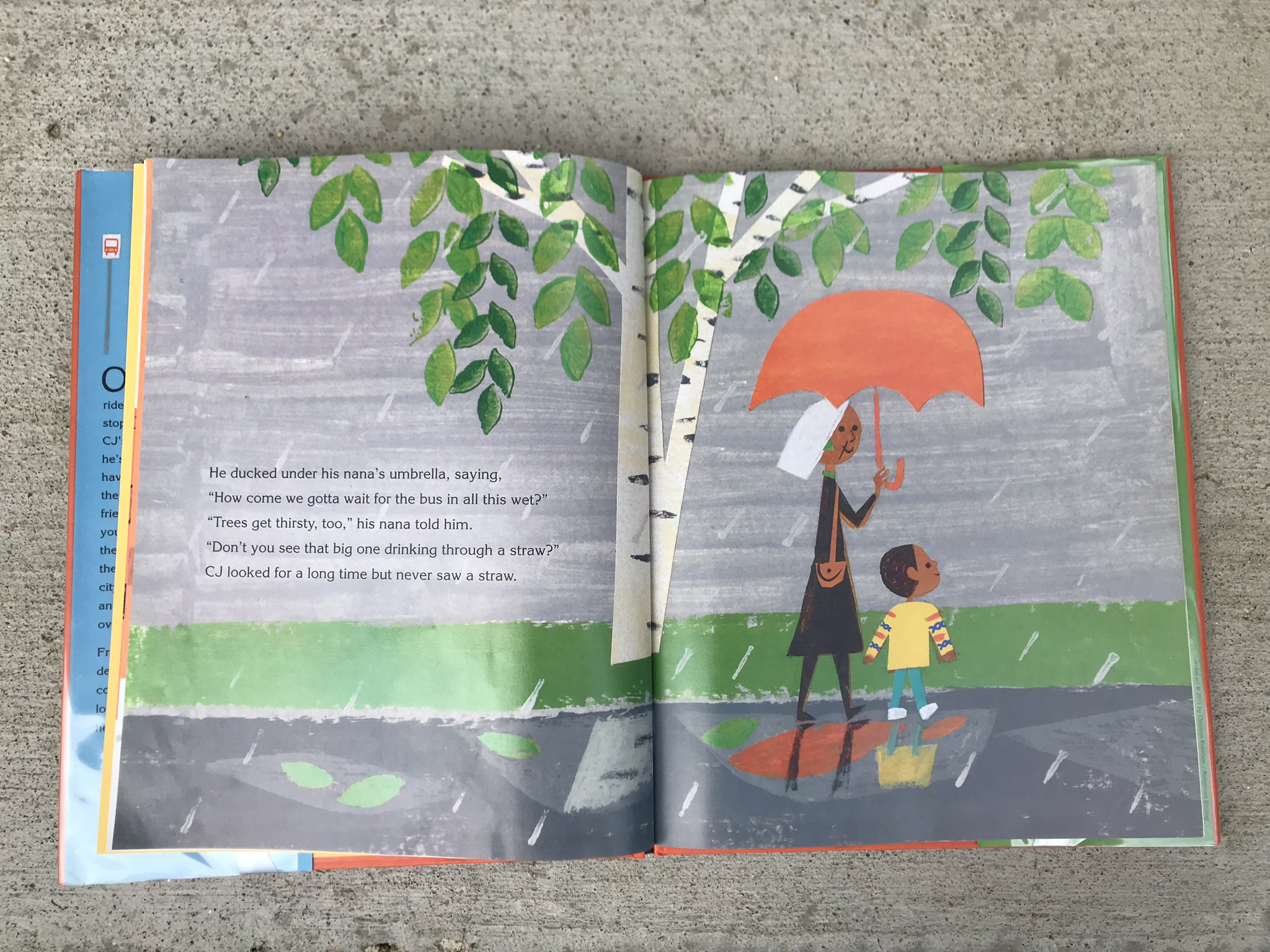
The telltale sign that separates contemporary realistic fiction from fantasy is that all of the events in the book could have actually happened. Nothing in this book is out of this world; CJ and his grandmother have regular everyday experiences in a neighborhood that could have been pulled from the streets of Denver, or any street a child might be familiar with. The focus of this book is not to tell a story about a fantastical world full of monsters and fairy-tale creatures and backdrops, but rather to tell a story that children can relate to, because it so closely mirrors an experience they could actually have, just seen from a different viewpoint. Contemporary realistic fiction resonates with readers because, “…it is the most familiar – the most accessible. This story takes place in my world. This is how I live. This book is about a girl like me. People are interested in their own lives,” (Tunnell, et al., 2016, pg 138). The illustrations in the book, though beautiful and carefully planned, are simplistic enough that they could represent a city almost anywhere. This familiarity builds a safety net for the reader. The book, because it could happen anywhere, allows the reader to feel comfortable about the story that’s about to unfold, while allowing it to have the ability to expand the reader’s limited concept of the world around them by exposing them to similar but different characters. The story starts out with the young child narrator asking his grandmother, “How come we gotta wait for the bus in all this wet?” (De la Peña, 2015). Most children have had the experience of getting caught in the rain, so they are familiar with this concept, but the book raises a new question: what is it like to get caught in the rain because you have to wait for the bus? Children who have never waited for or ridden the bus (especially in a situation outside of school) will be able to open up to this new experience by starting with the background knowledge they already have and are comfortable with, and then expanding upon it by putting themselves in the shoes of a character that reminds them of themselves.
CJ and his grandmother waiting in “all the wet”.
Although
we’re not sure exactly how old CJ is, he appears to be an elementary school
aged child. He’s definitely not a baby or a toddler, but he’s young enough to
be asking questions like, “How come that man can’t see?” (De la Peña, 2015) and to be slightly
confused by his grandmother’s metaphor of the trees drinking through a straw.
An important element of contemporary realistic fiction is that the story is
narrated by a main character that is roughly the same age as the reader, but
not younger, and that fits in this story. De la Peña’s book also ever so slightly shows the change
in contemporary children’s realistic fiction which previously focus on “children
in protected and positive situations,” (Tunnell, et al., 2016, pg. 140).
Although the book doesn’t closely
examine poverty or any kind of extreme situation, it does bring about topics of
inequality (why does CJ have to take the bus when his friend has a car? Why
does one area of town look dirtier than the others? Why does CJ have to work in
a soup kitchen with his grandmother when his friends just go home after
church?) Instead of answering these questions directly, De la Peña gives the reader a chance
to look at the story and the events unfolding from a new lens and curate their
own answers.
Although
De la Peña’s book does
not fit into a neat category, it most closely fits a problem novel. The focus
of the book is not heavy, though it does ask questions that make the reader
think. Tunnell, et al. explain that, “Life’s heavy challenges can appear in a
book without that title being classified as a problem novel if the problem is
not the major thrust of the story, even though it is present and must be faced…
when the problem is not the focus, the book general is not a problem novel,” (2016,
pg. 142). I wouldn’t exclusively categorize De la Peña’s book as a problem
novel, but it more closely fits this category than animals, humor, mystery,
school/family novels, sports, survival/adventure, or series.
Visual Elements and Visual
Literacy
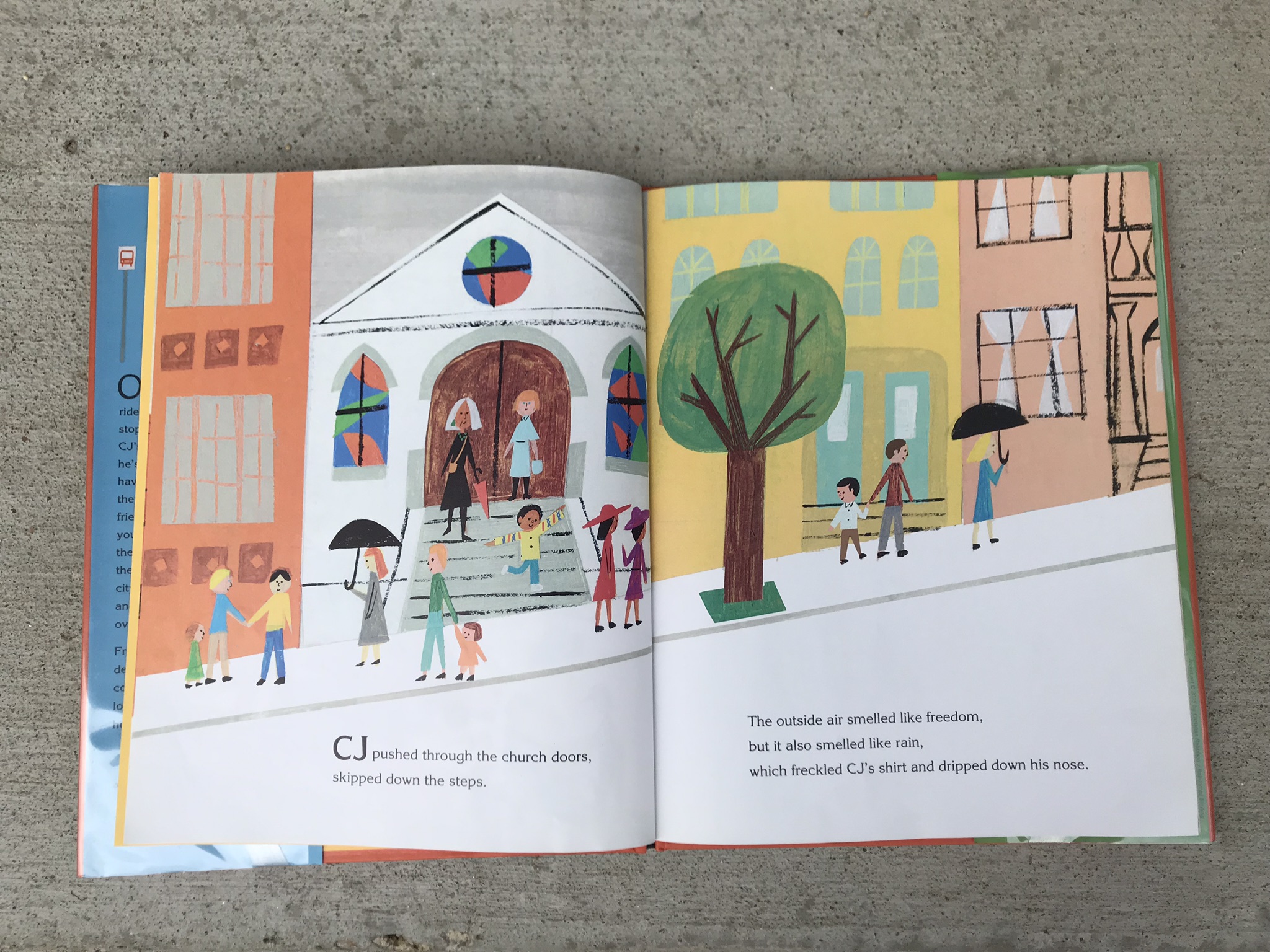
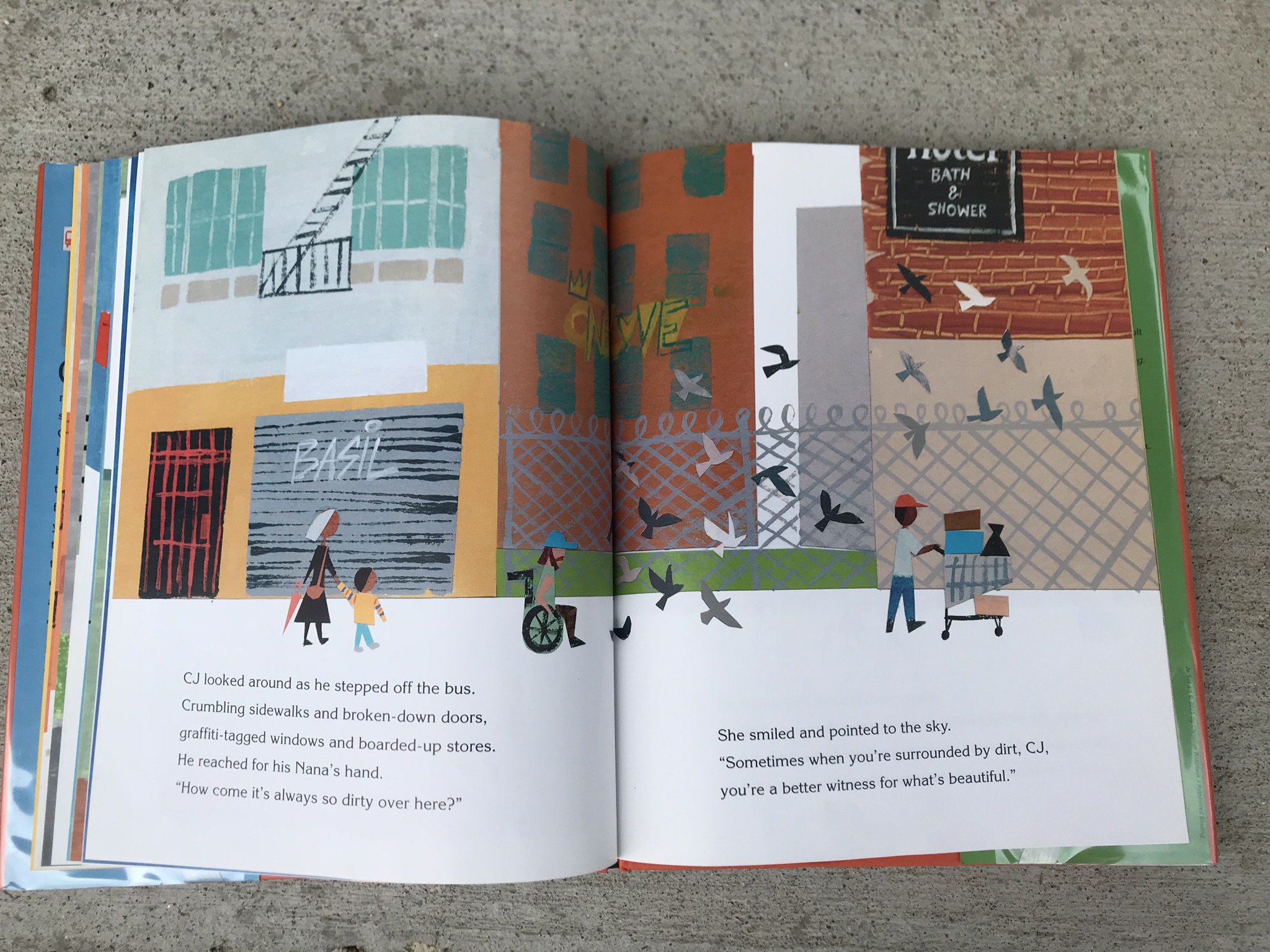
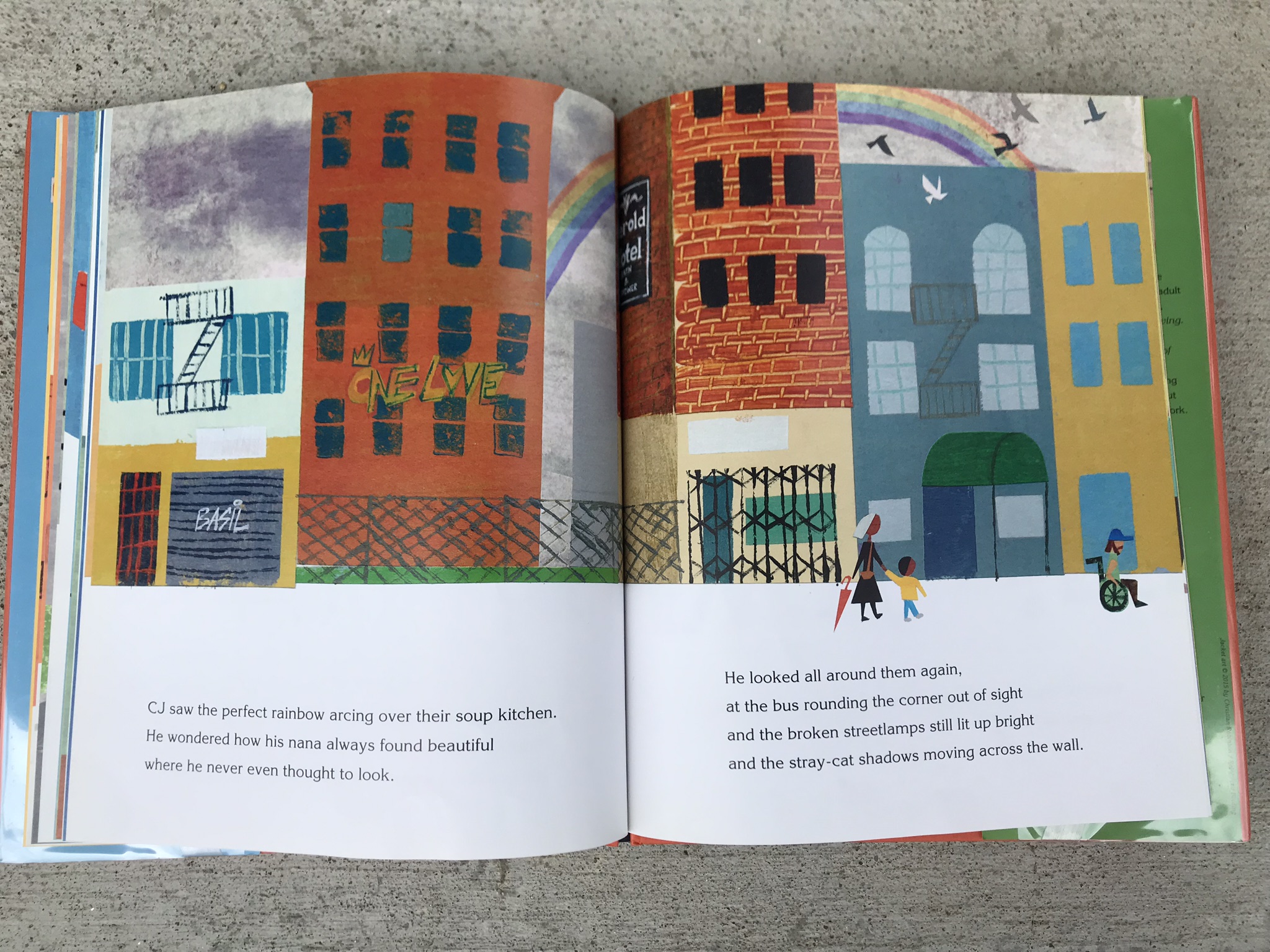
Last Stop on Market Street is a beautifully and carefully illustrated book. Robinson uses simplistic illustrations that set the scene of the book as any city, anywhere. The opening scene shows a city sidewalk with multiple buildings, a tree, and people mulling around outside of a church. Although the illustrations are not extensively detailed, this is purposeful, as it allows the reader to imagine the setting as being one they are familiar with. The reader can use their own background knowledge of a city/neighborhood and relate to it, because there is nothing specific that stands out and makes this scene different than any other.
Detailed enough to draw the reader in, but simple enough to be any city anywhere.
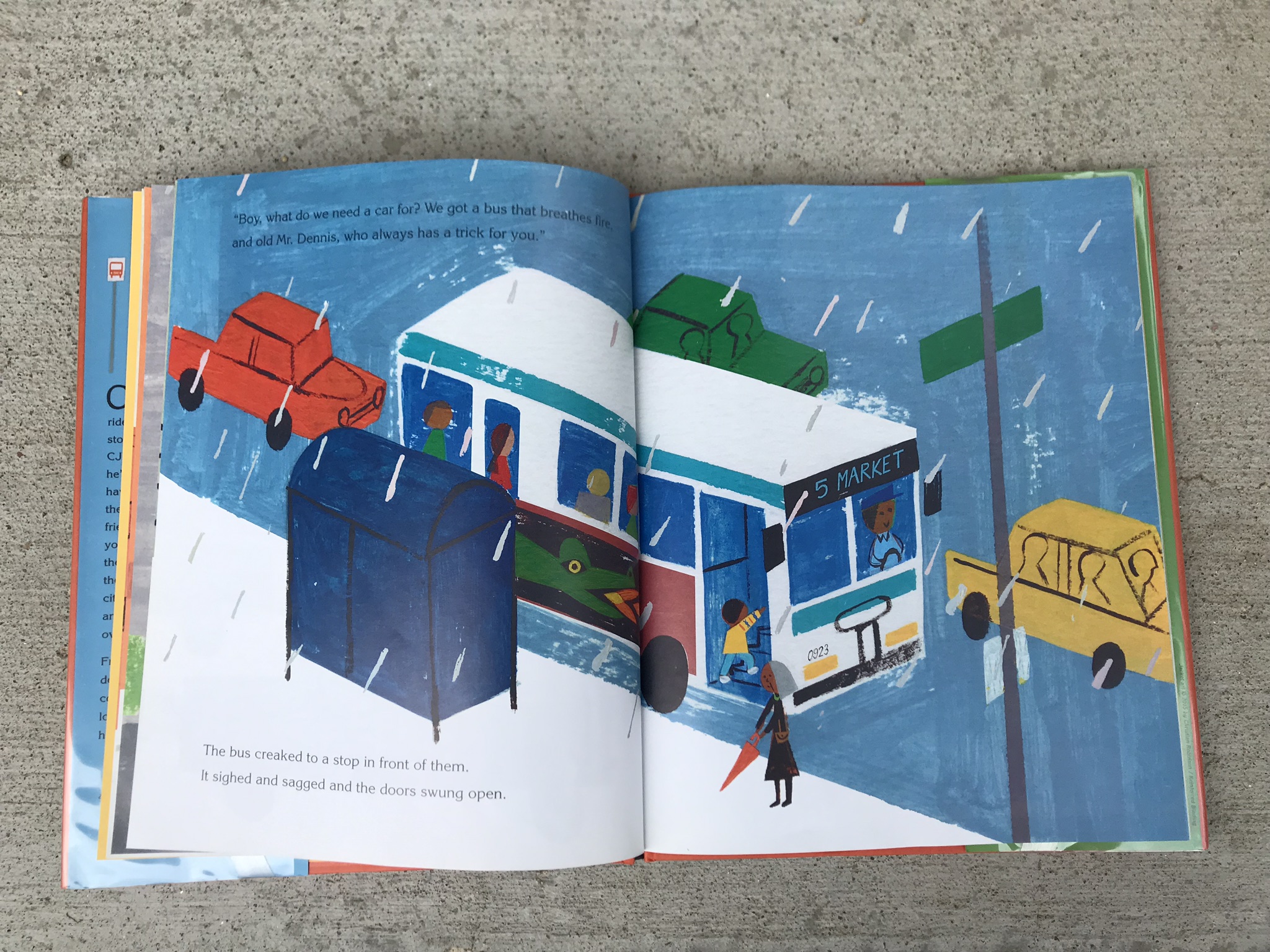
The faces of the people are soft, and all of them are pictured with smiles. Robinson sets this stage intentionally, allowing the young reader to feel safe and at ease at the opening of the story, seeing friendly faces in a familiar place. Robinson uses many bright colors to start the book out, showing the stained glass in the windows of the church, the different colored buildings on the street, and even the different skin tones of the people walking around. The day is bright and assumed to be sunny, which is in stark contrast to the next page, where CJ is seen walking in the rain. In this illustration, the sky has turned grey, and rain splatters all around CJ and his grandmother. However, Robinson’s use of color and line here is very important – the green leaves on the “thirsty” tree stand out to the viewer, as does their bright red umbrella, and even through the rain, CJ and his grandmother are still shown smiling. Robinson uses color again to bring depth to De la Peña’s words, when he says in grandmother’s voice: “’Boy, what do we need a car for? We got a bus that breathes fire,” (2015).
They might have to ride the bus, but their bus can breathe fire. Can CJ’s friend’s car do that?
Robinson has drawn a dragon on the side of the bus, breathing yellow and orange fire, which stands out from the grey and blue scene and makes the reader smile. Without this depiction, we wouldn’t know what CJ’s grandmother meant by that comment, and we wouldn’t realize that she was reminding him of the small joys in life, like a goofily painted bus with a happy and friendly bus driver inside.
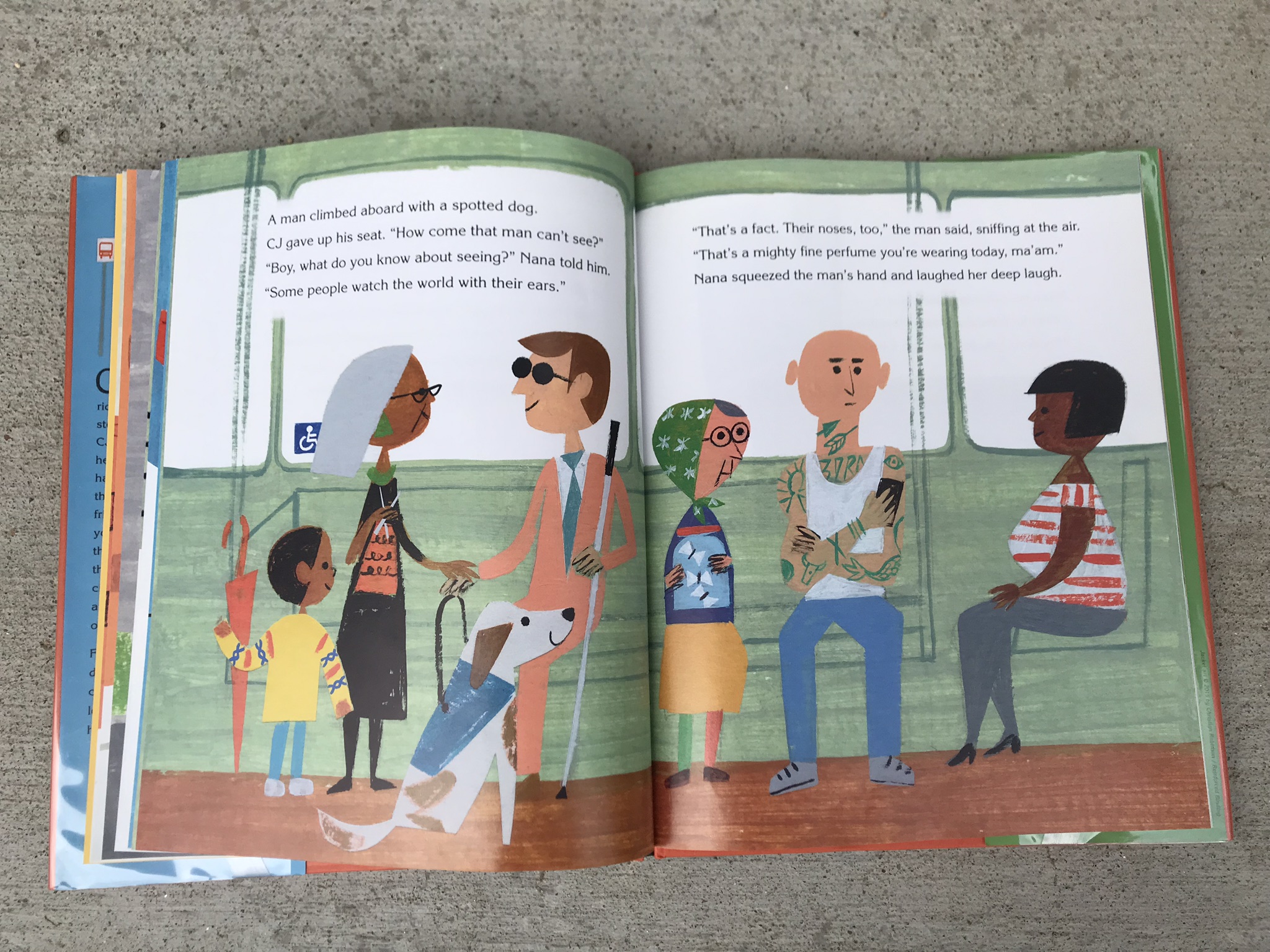
Robinson is also able to use simple illustration to draw attention to the differences between the people on the bus. He depicts a white blind man with sunglasses on and a working dog, a white old lady with a jar of butterflies, a white man with a shaved head and tattoos, and a black woman with short black hair. CJ and his grandmother have darker skin than those around them, and it’s not something that’s called attention to, but the viewer will notice the variance in skin tone of those on the bus, and will definitely notice the tattoos that snake around the man’s neck and arms. Even those who are depicted as white have a slight variance in their skin tone. Some wear glasses, some do not; some have black hair, some have grey hair, some have no hair. They all look different, but they’re all doing the same thing: riding the bus, together, to get somewhere, and listening to the music of the man with the guitar.
Many different faces, all going somewhere, united in sound and experience, on the bus.
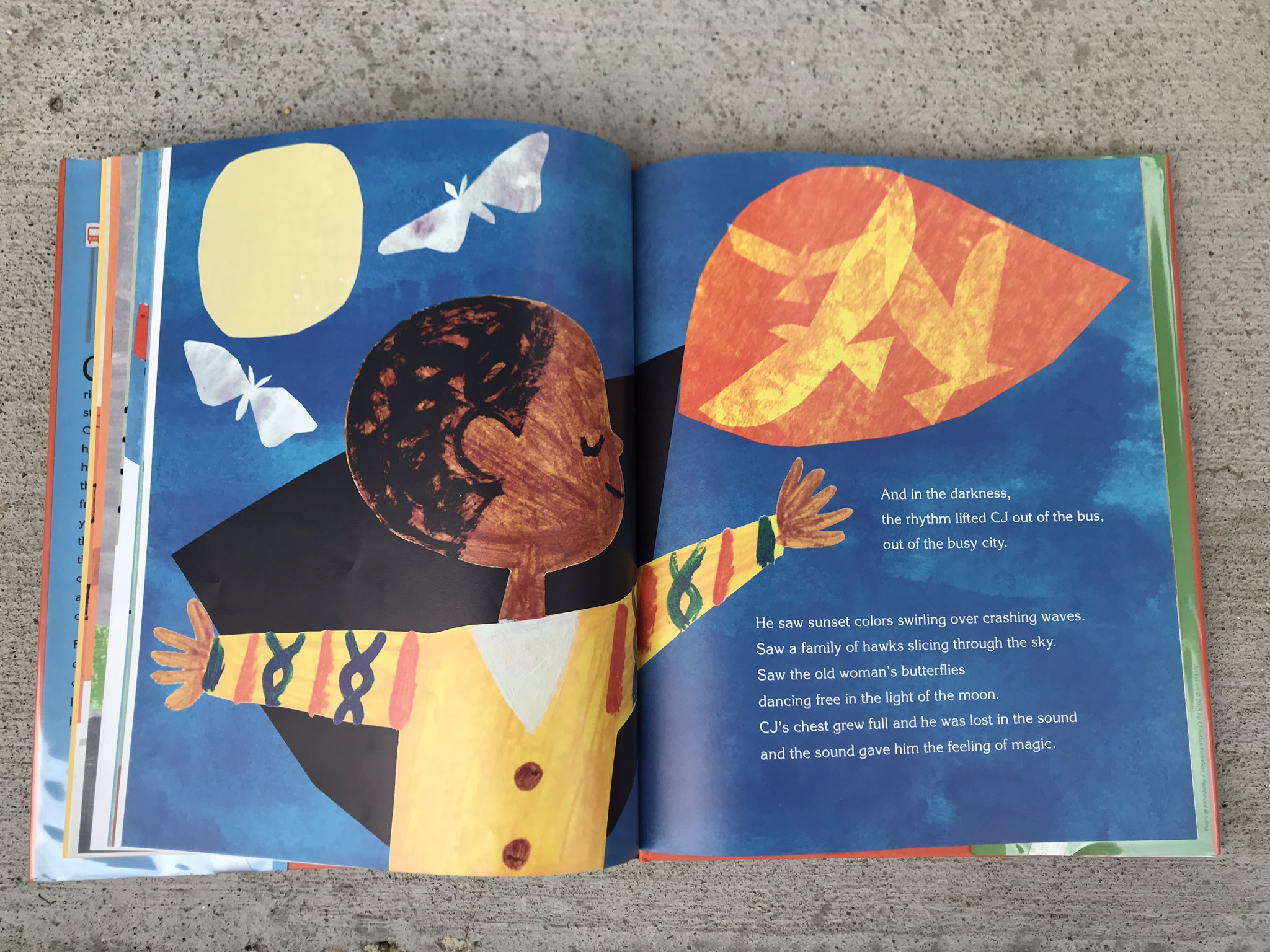
Robinson makes incredible use of color and line when De la Peña writes what CJ imagines as he hears the music: “He saw sunset colors swirling over crashing waves. Saw a family of hawks slicing through the sky. Saw the old woman’s butterflies dancing free in the light of the moon. CJ’s chest grew full and he was lost in the sound and the sound gave him the feeling of magic,” (2015). Robinson’s detailed collage scene shows the butterflies dancing in the moonlight, and the hawks inside of an orange leaf, along with CJ’s eyes closed in pleasure and smiling out of pure joy. Robinson gives us enough detail to begin to imagine the scene but also leaves it simple enough to be able to fill in the blanks with our own imagination.
The reader can use their own feelings of experiencing joy through music to connect with CJ’s joy here.
Finally, Robinson carefully draws the viewer’s eyes to what is important in the scene, and the message that De la Peña is trying to convey to the reader. For example, in the page where De la Peña describes the city as, “Crumbling sidewalks and broken-down doors, graffiti-tagged windows and boarded up stores,” (2015) our eyes are instead drawn to a flock of multi-colored birds flying off.
Where do your eyes immediately go?
In the next page, our eyes are immediately drawn to the rainbow behind the buildings, thinking about how “his nana always found beautiful where he never even thought to look,” (2015). In every scene where CJ asks thought-provoking questions about the world around us, our eyes are drawn to smiling faces, leafy green trees, fire-breathing dragons, smiling dogs, and colorful birds, encouraging us to see beyond what we may be used to seeing, and instead to see the beautiful, where we may not previously have thought to look.
Beauty can be seen in the most grungy of places if we just remember to look around us.
Book:
Chains (Seeds
of America Book 1) written by Laurie Halse Anderson, Published by Atheneum
Books for Young Readers: An Imprint of Simon & Schuster Children’s
Publishing Division, 2008, New York: New York
Awards: National Book Award Finalist, Scott O’Dell Award
for Historical Fiction
Book
type: Historical
Fiction
Overview
of author: Anderson is
a New York Times bestselling author whose books have sold millions of copies
throughout her career. Anderson has been nominated and received multiple awards
for her books, and has most notably been nominated for the Astrid Lindgren
Memorial Award three times. Anderson is a passionate fighter against censorship
of books, and has been recognized for this by the National Coalition Against
Censorship. Anderson also frequently writes about hard topics including sexual
abuse and bullying, and also is known for speaking out about the need for
diverse characters in young adult novels. She is a member of RAINN (The Rape,
Abuse & Incest National Network) and is on the leadership council. She also
writes on her own website that she “lives in Philadelphia, where she
enjoys cheesesteaks while she writes,” (nd).
Summary
of book:
Chains is a book set during the Revolutionary War in
New York City that spans from May 1776 to January 1777. The book centers around
Isabel and her sister Ruth, two slaves who original lived in Newport, Rhode
Island, who are shipped to New York to live with their new masters, the Lockton’s,
after their original owner passes away. The two girls who became orphans after
their father was beaten to death and their mother died of smallpox, are alone
in the world except for each other. They were supposed to be freed when their
owner Miss Mary Finch died, as it was stated in her will that they be, but the
papers were lost by her only living relative Mr. Robert who sells them in a
bar. The book chronicles Isabel and Ruth’s struggles in adjusting to their new
home and life, the tedious work they are to do under a cold and uncaring Madam,
and Isabel’s internal conflicts on whether to surrender to the seeming
impossibility of ever becoming free versus her need to fight to protect her
younger sibling by freeing them both.
Connections:
Anderson is a talented writer, which is obvious from
her long list of awards and nominations, but it really shines through in her
writing of Chains. A general rule of
thumb when determining quality of writing is that the writer is able to show us through writing what is
happening in the story, versus explicitly stating facts of what is going on.
Tunnell, et al. describe this by explaining, “Where lesser writing tells by summarizing, quality writing shows us what is going on by providing enough
sensory detail to allow us to make personal discoveries,” (2016, pg. 25). Anderson
does this beautiful, introducing us to characters and settings alike by using
descriptive figurative language to describe them, instead of just stating
facts. Anderson uses similes and metaphors through the book to explain how
characters are feeling, which gives us a much deeper understanding of them as
people.
When describing how she felt after her father’s
wrongful death, Isabel says, “I thought Momma would shatter like a bowl when it
falls off a table… there was lion’s blood on the ground mixed with the dust
like the very earth was bleeding, and we left there, we three in Miss Mary
Finch’s wagon, and everything in the whole world was froze in ice for near two
years after that,” (Anderson, 2010, pg. 11). Instead of saying that Isabel’s
mother was sad, or that her dad was a fierce man who died fighting, or that she
was depressed afterward, she uses descriptive and figurative language to allow
the reader to make those connections herself. The reader knows what kind of
crash a dish makes when it falls, they know that lions are known for being
fierce and courageous, and they can place themselves in Isabel’s shoes with the
vivid imagery that comes with a sentence like “the whole world was froze in ice”.
When Isabel and her sister Ruth are sold in the bar,
much to her sadness after a kind woman named Jenny who was a friend of her
mother’s unsuccessfully tries to buy her instead but fails, Isabel describes
the transaction as, “The thudding sound they [the coins] made as they fell to
the bottom reminded me of clods of dirt raining down on a fresh coffin,”
(Anderson, 2010, pg. 22). Anderson doesn’t say, “Isabel felt sad.” She
introduces us to a much wider range of emotions by reminding us: for Isabel to know the sound of fresh dirt hitting a
coffin, she must have already experienced loss and the grief that accompanies
it. The reader is then able to feel how Isabel must feel more deeply, as it isn’t
just sadness, or disappointment, but a heavy sense of loss and grief for the
life she thought she might have but was again, denied.
Anderson uses this figurative language throughout
the book when introducing us to new settings as well, saying things
like: “The fat moon lit the water like a lantern over a looking glass,” (2010,
pg. 25), “There were smaller buildings, too, all crowded shoulder to shoulder,
with no room for a feather to pass betwixt them,” (pg. 27), “The windows were
all closed, but sun streamed in, heating the room to a slow simmer and bringing
forth the ripe stink of underwashed gentlemen,” (pg. 87), and “The air was hot
and dripping, as if the city were wrapped in a wool blanket just pulled from a
boiling pot,” (pg. 99). All of these descriptions allow us to connect our own
personal experiences to what Isabel experiencing. Rather than her simply
telling us: “It was hot and humid, and the people inside were smelly” or “New
York was a big city with lots of building close to together” she allows us to
use our imaginations to think of a small feather not being able to float
between them, and a room so hot it felt like boiling water.
The character development of the main character
is seen through the various glimpses we get into her thoughts, and the way
those thoughts and feelings change over time. Isabel starts off as a girl who
knows not much about the Revolutionary War, and doesn’t care much about what
side is fighting for what, so long as she can keep her head down and stay out
of trouble to avoid being beaten, and to avoid her own sister being hurt. When
asked by a neighbor boy to become a spy, she is initially reluctant, worrying
about what kind of trouble she could get in and seeing no real reason to fight
for any particular cause. However, as Isabel is beaten down (literally, and
figuratively) over time, she begins to see the injustices around her, and the
action she must take to fight it. Isabel refers to these feelings inside of her
as bees, and we hear quite a lot about them throughout the novel. She describes
them at first as, “Strangest as all was the hive of bees that had taken up
residence inside of me. They swarmed under my skin and gave off peculiar
vibrations. The buzzing echoes in my brainpan and crowded out my thoughts. The
fire in me burned on and on,” (Anderson, 2010, pg. 150). These comparisons are
huge and important, as we begin to see a light turn on in Isabel and her burgeoning
desire to do something, anything, to start to fight back. When she feels like
she can see a way out, she describes this as: “The bees in my head fell silent
and hugged their wings tight to their bodies,” (Anderson, 2010, pg. 165), and
when she begins to lose hope as “My bones were hollow and my brainpan empty,”
(pg. 186) as if the bees – the strong buzzing force inside of her – had grown
quiet. Later still, the bees come back, and she tells us, “I had been invaded.
A dim plan had hatched itself in my brainpan without my consent, and I did not
much like it,” (Anderson, 2010, pg. 214).
We see a huge change in Isabel throughout the story,
from a girl who would keep her head down and accept what happened to her, to a
girl who decides to take charge of her own life. A most powerful sentence near
the end of the book reads as follows: “She cannot chain my soul. Yes, she could
hurt me. She’d already done so. But what was one more beating? A flogging,
even? I would bleed, or not. Scar, or not. Live, or not. But she could no
longer harm Ruth, and she could not hurt my soul, not unless I gave it to her,”
(Anderson, 2010, pg. 246). This awakening inside of Isabel is enormous and
shows that she has become someone who will fight for what she believes is
right, for herself, for her sister Ruth, and for the neighbor boy Curzon.
We see small glimpses of character development throughout as well, none as big as Isabel’s, but we see Master Lockton give small indicators that he cares for Isabel and Ruth and does not care much for his wife’s mistreatment of them; and we see Lady Seymour on her death bed apologizing for Isabel’s mistreatment and how she wished to buy Isabel as her own to save her from it. We also see character development in Isabel there as well, how instead of feeling warmly toward her the way she did when Jenny tried to buy her back in the bar in Rhode Island, she feels disgust over being seen as property that can be bought and sold. She wonders why Lady Seymour never thought instead to free her.
Anderson’s glimpses into Isabel’s thought give us a strong connection to her as a character. As we see her grow and begin to fight, often making choices that were scary or difficult for her and carried large consequences (beatings, a branding, the threat of being sold), we want to cheer her on the whole way. We’re reminded through the book of Isabel’s caring and kind-hearted nature, as she carries scraps to the prison for Curzon, as she reminices about her lost sister (when she says things like: “Ruth would love this. If we were free and at home in Rhode Island and these were our sheets and our laundry lines and our snow, she’d dance like an angel,” (Anderson, 2010, pg. 267), as she allows her sister to do things like wash rocks because it makes her happy even though she could catch a beating for it, or in the very beginning when she takes the first hit from Madam Lockton for Ruth’s laughter. Isabel will do anything to protect those she cares about, even if it means risking her own life, and Anderson does a masterful job of creating a deep and well-developed character that we also care deeply about.
Anderson carefully creates a story that is profound, but makes the reader take their own stance. Tunnell, et. al state “When facts and feelings are presented clearly in writing, readers draw their own conclusions without being told precisely what to think. Readers then participate in the experience instead of being led through it,” (2016, pg. 29). Anderson never tells us what side to pick in the Revolutionary War, she never tells us who is “bad” and who is “good”, and she never explicitly states her feelings on slavery. Instead, she leads us through Isabel’s life and experiences and allows us to draw our own conclusions. Isabel herself does not even know what side she is on, and grapples with trying to decide herself. When at the water pump in the middle of the war, she hears many slaves talking about both sides of the war. A woman explains, “’The British promise freedom to slaves but won’t give it to the white rebels,’ she said as she pushed the handle up and down. ‘The rebels want to take freedom, but they won’t share it with us,’” (Anderson, 2010, pg. 166). Isabel struggles to figure out what side aligns with what she wants and believes in (freedom for herself and her sister, and her friend Curzon) and Anderson does a wonderful job of placing us in her shoes, and allowing us to examine the circumstances and make a decision for ourselves, rather than telling us what is right or wrong. She instead shows us Isabel’s own experiences, and her thoughts on her situation, such as: “A body does not like being bought and sold like a basket of eggs, even if the person who cracks the shells is kind,” (Anderson, 2010, pg. 261) allowing us to draw our own conclusions about the war and what it would feel like to be a slave.
Anderson’s novel is rooted in fact, and Tunnell, et. al remind us that while historical accuracy is important, the minute details and research need not be included to create a compelling story. Anderson does a great job of balancing both – she introduces us to the plot to kill Washington, the fires in New York, what it felt like to board British soldiers, and the casualties of war. She shows us the conditions of the prison, and main important events are included (like the real capture of over 3,000 American soldiers), but the underlying message is really Isabel’s personal story through it all. The interwoven facts of the war give us a real sense of what it would have been like to live in that time period, but they do not take away from the central theme: one girl’s fight for her own freedom, and the feeling of being “chained between two nations,” (Anderson, 2010, pg. 182).
References:
Anderson, L. H. (2010). Chains: (The Seeds of America Trilogy). New York, NY: Atheneum Books for Young Readers.
Book: Trombone Shorty, written by Troy “Trombone Shorty” Andrews, illustrated by Bryan Collier. A 2016 Caldecott Honor Book and Coretta Scott King (Illustrator) Award Winner.
Book
type: Picture book, partial
biography.
Book
summary: This creatively
illustrated book shows in watercolor and collage the life of Troy “Trombone
Shorty” Andrews and how he became the renowned musician that he is today. The book
focuses on his early life, how he found the original trombone he became famous
for using, and how he got his nickname. The book also tells the young reader
what it was like to grow up in New Orleans, the importance of music in the
community, and a little bit about what the author (Troy Andrews himself!) is doing
now.
Overview
of the author: Andrews starts off by
saying, “I like to say that the city of New Orleans raised me,” (2017). Andrews
explains that music was always all around him, and that his family members were
also musicians, which influenced him as well. Music made him feel connected to
those around him and his community. He explains: “There were people always
coming and going from my house, but music was the thing we had in common. No
matter how tough things got, listening to music always made me feel better,”
(2017). Andrews found community, solace, and escape in music, and he feels
strongly that the tradition is carried on throughout history. To make sure of
this, Andrews founded the Trombone Shorty Foundation and Trombone Shorty Music
Academy, to ensure that the deep roots of New Orleans musical culture are not
forgotten.
Overview
of the illustrator: Bryan
Collier is a notable children’s book illustrator who developed his own style of
meshing watercolors along with collage. Collier earned a BA in fine arts from
Pratt Institute in New York, and it was there that he became a volunteer at the
Harlem Horizon Studio and Harlem Hospital Center, where he eventually became a
director and inspired his “deep sense of responsibility to be a positive role
model for kids,” (Collier, 2011). Although Collier says that he was also
encouraged to pursue art and to read, stating: “At home and at school, I was
encouraged to read. I remember the first books with pictures that I read by
myself were The Snow Day by Ezra Jack Keats and Harold and the Purple Crayon by
Crockett Johnson. I liked the stories, but I really liked the pictures,” (2011)
it took him 7 years to finally get published.
Connections
Visual elements in Trombone Shorty: The unique illustrations in Trombone Shorty mirror the uniqueness that is New Orleans. Illustrator Bryan Collier’s mix of collage and watercolor establishes the setting in Andrew’s neighborhood of Treme, New Orleans. Andrews states, “Any time of day or night, you could hear music floating in the air,” (2017). Collier illustrates this scene by showing balloons floating through the air, representing the music being played all through the neighborhood.
Colorful balloons floating through the air symbolize the music all around.
Collier also uses line in his depiction of the neighborhood, cutting the scene into multiple pieces, and drawing the reader’s eyes to the little boy walking past the houses, and also to the balloons in the corner of the frame. He mixes in real photos of trees, leaves, and balloons along with painted stoplights and houses to make the scene feel just slightly dream-like. On the next page, there is a painting of Andrew’s older brother James playing the trombone, and Collier uses line to draw the viewers eyes immediately to the huge trombone and makes it look as if it is popping off the page.
The smell of freshly cooking gumbo floats through the air.
He does this again in a scene with Andrew’s mother cooking in the kitchen, using line to create swirls around the page to represent the heavenly smell of gumbo floating and swirling around in the air.
In multiple scenes where Andrew’s is in a crowd of people, Collier intersperses photos of real people along with portraits, making the reader feel as if they were really there, in a sea of people, so bustling and busy that they blur into simple colored shapes by the back.
Is this what it feels like to be on stage during Mardi Gras, looking out into a sea of people?
All of the pages come alive with vibrant color, depicting everything from the multi-colored balloons in the air at festivals and parades, to the lively and bright neighborhood of Treme, and the triangles coming off of the instruments creating a feeling of pulsating musical instruments. Although the figures in the illustrations are all frozen in time, Collier depicts action subtly: hands pressed on instruments about to play, hands in air mid-clap and instruments pressed to lips.
The colorful lines coming off of Andrew’s trombone give the feeling of the music pulsating out of the instrument.
Collier also adds depth to Andrew’s words and characters, adding see-through paper crowns to the boys in the neighborhood when Andrews says, “We might have sounded different from the real brass bands, but we felt like the greatest musicians of Treme. We were making music and that’s all that mattered,” (2017). The crowns on the boys show us how they really felt: like kings of the neighborhood.
Kings of the neighborhood, kings of sound.
He adds a real photo of a child showing pure delight when Andrews tells us, “I loved these parades during Mardi Gras because they made everyone forget about their troubles for a little while. People didn’t have a lot of money in Treme, but we always had a lot of music,” (2017). Fingers pointing in the air, thousands of multi-colored people in the crowd, bright colored balloons, and the joy on the little boy’s face all paint the picture of how it would have really felt to have been at Mardi Gras.
Brightly colored balloons and pure unadulterated joy.
Transactional Theory Transactional theory states that, “The reader’s background, the feelings, memories, and associations called forth by the reading, are not only relevant, they are the foundation upon which understanding of a text is built. And so transactional theory invites the reader to reflect upon what she brings to any reading, and to acknowledge and examine the responses it evokes,” (Probst, 1987). Therefore, the meaning that is taken away from the text will vary considerably, depending on who is reading it. When I read this text, I found it to be an engaging biography written about someone I knew nothing about. I took an efferent stance, meaning that the meaning I found in the text was informational. Because I knew that I would be dissecting and analyzing the book after I read it, I was using it, “as preparation for another experience,” (Probst, 1987). Other readers might take an aesthetic stance, thinking about past memories of festivals and parades attended, art classes that focused on collage, and musical instruments they’d played before. They might think of times when they were trying to make their own instruments.
The meaning taken away from the text depends on what the reader intends to gain from it, and as teachers I think a lot about how often we allow students to read simply to read, and how often we ask them to read with something in mind. If I had students in a small group and before we read the book together I said, “I want you to think about the illustrations in this story and how they make you feel. What kinds of emotions do you experience? Do you feel excited? Nostalgic? Happy?” my readers would be thinking about their emotions. If I said to my students instead: “After we read this book we’re going to write a biography on Trombone Shorty,” they would be looking for information about Trombone Shorty and his experiences, prepared for another task afterward. If I said to them instead, “We’re going to read this book just for fun, and afterward I’m not going to ask you to do anything at all!” (Which I occasionally do, just so my students know we’re reading for pleasure and that it’s more than okay to do that!), they might take either stance, depending on their own preferences. If that particular student loves learning about people, they might be absorbing information about Trombone Shorty (efferent) or they may choose to focus only on the pictures (aesthetic). When readers aren’t told what to think or do, they’ll choose their own adventure. Some students may be thinking about collage and how they could create their own based on the pictures, some might think about learning how to play an instrument, some might be desperate to seek their own sources to learn more about Trombone Shorty or to hear his music. It all depends on the individual reader, as “The text is simply ink on paper until a reader comes along,” (Probst, 1987).
Trombone Shorty, where y’at now?
References:
Andrews, T.
(2017). TROMBONE SHORTY. Live Oak Media.
Colorful beginning and end pages set the tone for this heart-warming and hilarious graphic novel about Cece Bell and her profound hearing loss.
Book:El Deafo, written and illustrated by Cece Bell, Newbery Honor book,
published by Amulet Books.
Type of book: Graphic
novel, non-fiction, autobiography.
Overview of the author/illustrator: Cece
Bell is just as goofy as you might expect her to be, based on her own
renditions of herself in El Deafo. The
headliner to her website has a banner for her newest creation: Smell My Foot;
and she describes herself as: “I am a children’s book author and illustrator,
and, quite possibly, a hermit. I eat nuts, avoid nits and gnats, and make
lovely nets out of knots,” (Bell, 2012). Bell’s writing/illustrating process is
interesting to note, because it actually varies from what I am most used to
reading. Bell proclaims that she actually writes the story first and then starts on the illustrations, once
the story is fine-tuned enough and ready to go. She describes this as follows: “When
I get a decent idea, I usually write it on a piece of paper and stick it in the
top drawer of my desk. When I’m ready to start working on a new book, I look at
all those scraps of paper and pick one that is most appealing — or combine a
few into one story. I always, always write the story first, trying very hard to
get it as perfect and streamlined as possible. Once I’m satisfied with the
story, I do a bird’s eye view of the whole book on one piece of paper, to try
to figure out the pacing and that sort of stuff. Usually I end up editing the
words at this point as well. Lots of back-and-forth between words and tiny
pictures,” (Jules, 2008). Bell writes in the back of El Deafo, “I myself am ‘severely to profoundly’ deaf, the result of
a brief illness when I was four years old. While I’m fascinated by Deaf
culture, I have not, as yet, pursued a direct role in it,” (2014). One could argue
that’s not quite the case, as El Deafo shares her story as a person in
the Deaf community and might serve to educate others on what it looks, and
feels like, to be a Deaf person.
Bell’s “Note from the Author” at the end of the book sheds more insight into the character we grew to love as an adult, and what motivated her to write this novel.
Summary of the book: El Deafo is a light-hearted graphic novel that chronicles Bell’s transition into being a Deaf person. She wasn’t born hard of hearing, but rather lost her hearing due to a case of meningitis she had when she was four years old. The book starts with her hearing loss (just before starting Kindergarten), and then follows her all the way to 5th grade, showing us all the ups and downs along the way; her struggles to make friends, what it’s like to lug around her giant hearing aid (and what it’s like to break it!), adventures in forced sign language learning, and even her first elementary school crush.
Blank text bubbles make the reader begin to understand what it would feel like for Bell to wake up as a child recovering from an illness, unable to hear.
Connections:
Cece
Bell doesn’t really fall into neat category for a biography. She is an artist
and an author; but her book El Deafo isn’t
about her learning how to write and illustrate. It doesn’t even go past the 5th
grade, and in fact, aside from a comment about a girl in her class who can draw
a good horse, she doesn’t mention an interest in either. She’s not a sports
personality, explorer, adventurer, humanitarian, or villain. Judging by Bell’s
own descriptions of herself, she probably wouldn’t agree with this, but she’s
really just an interesting person. Bell
writes in the back of El Deafo: “I
was a deaf kid surrounded by kids who could hear. I felt different, and in my
mind, being different was not a good
thing. I secretly, and openly,
believed that my deafness, in making me so different, was a disability. And I
was ashamed,” (2014). She finishes by adding, “And being different? That turned
out to be the best part of all. I found that with a little creativity, and a
lot of dedication, any difference can be turned into something amazing. Our
differences are our superpowers,”
(2014). I believe that Bell wrote this book to show others that being Deaf isn’t
a disability, and being different – in ANY way – isn’t a bad thing. Tired of
hearing that it makes you “special” (which Bell just heard as a synonym for “different”)
she transformed it into something that gives you superpowers. Something almost all children (and adults) wish and dream
for, something positive.
Bell begins to see herself as a superhero, and not just a child who’s “different”.
El Deafo is a partial biography, as it focuses only on Bell’s childhood through the 5th grade, and only focuses on the subject of her profound hearing loss through her early years and nothing else about her later life. However, the fact that this graphic novel is only a partial biography does not mean that the story is lacking – rather the opposite. Focusing on just this part of Bell’s life gives her the opportunity to tell this part of her story in its entirety. Tunnell, et al. describe one of the pitfalls of biographies as, “One of the shortcoming of some juvenile biographies is that they glorify their subjects, turning them into idols or making them larger than life. This is another form of stereotyping that alienates readers from the subject of a biography instead of helping them know that person as a real human being. To present a balanced view means looking at the blemishes as well as the strong points,” (2016, pg. 173). Although Bell presents her character (herself) as a superhero, we follow her through all the struggles and low-points to get there – which is what makes her a full and balanced character.
Bell struggles through sign language classes that she’s forced to take by her mother, and we really feel what it’s like to have your hearing-aid batteries run down as the text becomes lighter until the speech bubbles are entirely empty.
We see Bell struggle to accept sign language classes but later see her reflect on this by being able to see her thought process, “I could have learned how to do that if I had ‘participated.’ And maybe I should have… but then other people would stare at me the way I’m staring at that couple. Right? Oh, why do I even care what other people think?” (2014, pg. 117). We see Bell’s self-consciousness at her hearing aids, her struggles to fit in, worries that everyone is only looking at her hearing aids, and then we see her begin to see herself as a superhero.
Bell provides us with unexpected insights, letting us see her innermost thoughts throughout the book. She does this with her words and through illustrations: showing us exactly what it would feel like to hear nothing at all (blank speech bubbles) to have your hearing aid batteries run down (as the text becomes lighter) to how Bell explains that she can hear what people are saying with her aids in but she can’t understand them (speech bubbles full of nonsense).
She can hear but the sounds she’s hearing don’t make any sense.
She even shows us how difficult it is to lip read, showing us different scenarios where she can not fully see a person who is talking, and how difficult it can be to watch TV based on the characters positioning, explaining rather humorously that she can’t “lip-read a butt!” (2014, p. 77).
Bell feels like she’s underwater, and the illustrations really capture that feeling.
She also uses dialogue throughout the whole novel to “reveal character… when a person’s mouth opens, truth emerges about personality, motives, desires, prejudices, and feelings,” (Tunnell et al., 2016, pg. 27). This is a crucial piece to Bell’s storytelling, as we begin to understand her struggle with her friend Ginny, who speaks to her LOUDLY and SLOWLY as if that will help her to become less deaf. The speech bubbles uses when showing how Ginny speaks to her really shed light on why the friendship becomes strained, despite all that they have in common. If we were just told that Ginny speaks to her that way without being shown it, it wouldn’t have the same meaning and the reader would not feel as empathetic toward Bell.
Bell’s illustrations of the way Ginny talks really show us what it would feel like to be spoken to the way that she does to Bell, and over time why it frustrates her as much as it does.
Being that this book is a graphic novel, the illustrations carry a lot of weight. The book is illustrated in a cartoonish style, where the characters are depicted as bunnies. I believe that Bell did this to show how big of a role her ears played in her early life. Perhaps this is how Bell really felt – that her ears stuck out with the addition of her “funny-looking ear globs” (Bell, 2014, pg. 19). Bell writes in the back that she felt different her whole life, and illustrating the characters as bunnies really draws attention to their ears, in the same way she probably felt.
Bell’s hearing loss makes her feel isolated, like she’s inside of her own little bubble.
As stated previously, the illustrations in this book do a look of the work to enhance what the writer is saying. We really feel how it feels when Bell’s batteries run out, what it’s like to try to lip-read when you can’t see someone’s mouth, how Bell can hear what people are saying but she cannot understand them, the weight of her elementary school crush (when her eyes are drawn as hearts!), and her embarrassment at situations those who can hear would not think of (when the lights go out and she cannot lip-read, or when she’s asked to watch a movie at a slumber party). The illustrations through the book establish the mood, reinforce the text, andhelp to define and develop the characters.
Bell’s heart-shaped eyes show us how she really feels as a child with her first crush.
We wouldn’t have as in-depth of an understanding of Bell’s tricky relationship with her pushy first best friend Laura without the illustrations of her playing “the dining room game” where her dog Fluff bites her as she marches around the table; or the illustrations that depict her as El Deafo, “pushing back” and using her phonic ear cords to “[tie] her up with the Cords of Intuition!” (Bell, 2014, pg. 58). We wouldn’t understand as well how good it feels to be friends with Martha if she wasn’t shown blushing and thinking, “Wait! Martha knows about my hearing-aids?” (Bell, 2014, pg. 127) and her shown again as El Deafo, asking her, “By the power of the pinkie, do you swear to join the fight against boredom and loneliness, and o never swerve from the path of true friendship?” (pg. 130). Her short spurts of imagination as El Deafo show us that despite the hurdles she’s faced, Bell develops not only a sense of humor, but also resilience. She know that she’s different, but little by little, she begins to realize how amazing, how incredible, and how much of a superhero that truly makes her.
Tired of being told she’s “special”, she begins to see herself in a new light. As El Deafo, the superhero with super powers who can do things that others truly can’t. Like hearing her teacher go to the bathroom throughout the school, or being able to hear her friends from miles away!
Bell, C., & Lansky, D. (2014). El Deafo. New York, NY: Amulet Books.
Jules. Seven Impossible Things Before Breakfast: Seven Questions Over Breakfast with Cece Bell. (2008, December 4). Retrieved June 17, 2019 from http://blaine.org/sevenimpossiblethings/?p=1520
Tunnell, M. O., Jacobs, J. S., Young, T. A., & Bryan, G. (2016). Children’s Literature, Briefly (6th ed.). Upple Saddle River, NJ: Pearson.